Board Games for Mobile Boost Remote Team Connection and Collaboration
Introduction
Remote and hybrid work is here to stay. In 2026, flexibility remains central to how companies hire and retain talent, according to recent workplace data. But there is a real problem hiding behind that flexibility.
When teams don’t share a physical space, something important gets lost.

The Framery Workplace Trends Report highlights that hybrid work has reduced spontaneous interaction, making everyday connection harder to maintain. And when employees feel disconnected, engagement drops. Communication breaks down. Collaboration suffers. Morale slowly fades.
You have probably felt this yourself. Maybe your team’s Slack channel feels quiet. Maybe meetings feel more transactional than before. Maybe the water cooler moments just are not happening anymore.
Here is the good news. Fixing this does not require expensive retreats or complicated software rollouts. One of the most effective tools is already sitting in everyone’s pocket.
Board games for mobile offer a surprisingly powerful way to bring remote and hybrid teams back together. They are easy to start. They fit into busy schedules. And they create the kind of low pressure interaction that builds real connection.
Industry data shows that 89% of employees report higher productivity after introducing structured engagement activities. And 52% of HR departments say retention improves too.
This article gives you practical, evidence-based guidance on choosing the right board games on mobile for your team, how to roll them out without friction, and how to measure the real impact on collaboration and morale. Whether you are looking for games to play on laptop during a virtual meeting or fun 2 player games pc for a quick break between calls, you will find strategies that actually work.
Ready to turn your team’s screen time into real connection? Let us start with why mobile board games work so well for distributed teams.
Why Traditional Team-Building Falls Short in Remote & Hybrid Teams
You have probably been there. Someone schedules a virtual happy hour. Everyone joins with a drink, there are a few awkward silences, and after 20 minutes people start dropping off. It feels forced, and honestly, it does not build real connection.
The problem is that one-size-fits-all activities just do not work for distributed teams.
The Framery Workplace Trends Report highlights exactly why. Hybrid work has cut down on spontaneous interaction. Those quick chats by the coffee machine that build trust naturally? They are gone for remote teams.
And here is the real challenge for managers. You have limited time, a tight budget, and teammates spread across different time zones. Finding an activity that actually works for everyone feels impossible. The old playbook does not fit this new world.
What you need is something simple. Something that does not require coordination nightmares or expensive planning. Something that feels natural, not forced. That is where board games for mobile come in as a real solution. Unlike forced happy hours, they let people connect on their own terms.
If you are ready to move past awkward virtual events, Contact Us to discover ready-to-run activities and quick energizers that boost engagement and collaboration without the headache.
The Engagement Crisis in Distributed Teams
The engagement numbers tell a clear story. Gallup-style metrics have shown a sustained drop in employee engagement for remote workers since 2020. The Framery Workplace Trends Report explains why: hybrid work cuts down on those quick chats that used to build connection naturally. When people feel disconnected, they check out.
Then there is hybrid inequity. In-office staff get more face time, casual feedback, and visibility. Remote team members often feel left out or second best. That unfairness breeds resentment and hurts psychological safety. It becomes harder to speak up or trust teammates.
With these real challenges, many managers are searching for low-effort ways to reconnect. Simple options like board games for mobile or fun 2 player games on a laptop can create shared moments without complex planning. Just a few minutes of light play can start rebuilding that lost connection.
One easy way to break the ice? Share a funny story from The Ridiculous series. Start Reading to find conversation-starting material that gives your team something to laugh about together.
The Limitations of One-Time Activities
Many teams try to fix the engagement crisis with a monthly virtual happy hour or a quarterly online trivia night. These one-time events feel good in the moment, but they rarely change how people work together day to day.
Here is the problem. A single event creates a short-term morale spike, but that spike fades fast. Without regular connection points, teams fall back into their old habits of siloed work and low trust. The Framery Workplace Trends Report notes that hybrid work reduces spontaneous interaction. A once-a-month activity simply does not fill that gap.
There is also a practical side. Activities that ask people to download heavy software or sync schedules across different time zones often end up with low participation. Some team members cannot join, and others just skip it. The Work Wellbeing Playbook 2.0 reminds us that giving employees autonomy matters for engagement. Forced, complex events do the opposite.
The real fix needs to be low friction and repeatable. Something like board games for mobile works well because there is no download required, no complicated setup. You just play and connect. Simple options like games to play on laptop or fun 2 player games PC style quick matches can happen during a coffee break without any planning at all. That consistency builds real connection over time.
If you want ready-to-run activities that fit into your team’s natural rhythm without extra work, Contact Us to see what could work for your group.
The Science Behind Digital Board Games: How They Foster Collaboration and Creativity
You might think playing a game on your phone is just for fun. But the research tells a different story. Game-based learning has a real, measurable effect on how people think, connect, and create together.
A major review of studies found that game-based learning has a moderate to large effect on cognitive, social, emotional, motivation, and engagement outcomes. That is not just for kids. It works for adults too.
Here is why it matters for your team.
First, games activate reward pathways in the brain. When you solve a puzzle or earn points together, your brain releases feel-good chemicals. This makes collaboration feel good instead of forced.
It also lowers social anxiety because the game becomes the focus, not the awkward small talk.
Second, cooperative games force you to communicate and solve problems together. You have to share information, take different perspectives, and make joint decisions. These are the same skills your team needs for real work projects. A 2026 study found that game-based learning provides a safe, engaging space where adults can explore and develop these skills in a meaningful way.
Third, mobile board games remove every excuse not to play. No special hardware. No complicated rules. No downloads. Just a simple link and you are in. This low-friction design means more people actually participate. And consistent participation is what builds real team connection over time.
The science is clear. Regular, low-stakes play builds the collaboration and creativity that one-time events cannot.
Want to put this science to work without extra planning? Contact Us to find ready-to-run activities that fit your team’s flow.
Cognitive and Social Benefits of Play
When your team plays a quick round of board games on mobile, something powerful happens inside their brains. The challenge and fun trigger a release of dopamine. This feel-good chemical does more than just lift moods. It actually boosts motivation and helps people remember what they learn.
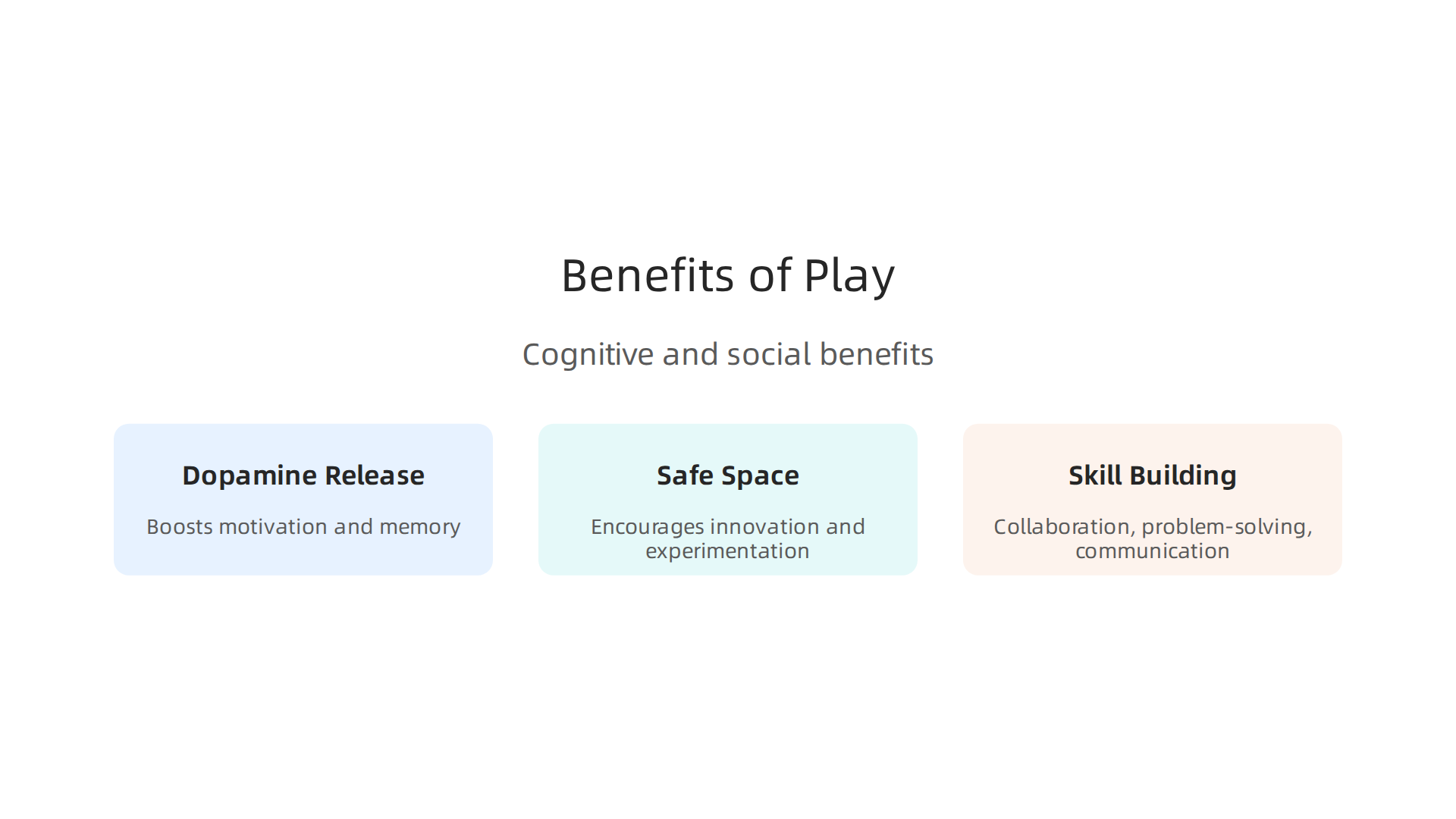
Research shows game-based learning has a strong effect on cognitive and social outcomes source. That means your team is not just having fun. They are wiring their brains to work better together.
Structured play also creates something precious: a safe space to fail. In a real project, mistakes can feel costly. But in a game, failure is just part of the process. You try again, you laugh, you experiment. This low-stakes environment encourages innovation and creative thinking. A 2026 study found that game-based learning gives adults a safe, engaging space to build new skills in a meaningful way source. So treat your next team meeting like a fun 2 player games pc session. Let people mess up, learn, and grow together without fear.
Want a ready-made activity that builds this kind of safe, playful culture? Start Reading a lighthearted sci-fi comedy your team can enjoy and discuss together.
How Game Mechanics Drive Collaboration
Here is where game design does the heavy lifting. The mechanics inside board games for mobile are not random. They mirror how real collaboration works.
Shared goals create alignment fast. When everyone on your team works toward the same win condition, you stop thinking about yourself and start thinking about the group. Turn-taking builds patience and active listening. Resource trading forces negotiation, trust, and compromise. These are the exact skills your team needs in meetings, projects, and daily workflow. A 2025 meta-analysis of 43 studies found that game-based learning significantly boosts both achievement and knowledge retention source. The mechanics themselves teach the skills.
Board games on mobile add one more advantage: asynchronous play. A teammate in Singapore makes their move in the morning. You see the result when you log in from London that evening. No scheduling conflicts needed. The collaboration happens across time zones without anyone being online at the same moment.
That is a game changer for hybrid and remote teams.
Want ready-to-run activities that build these collaborative skills? Contact Us to discover quick energizers designed for modern teams.
Top Digital Board Games Optimized for Mobile Play in 2026
The board games on mobile market has matured fast. In 2026, you have plenty of options that work well for teams. The best ones share a few things: easy setup, support for different team sizes, a clean mobile design, and built-in chat or voice features. Recent lists confirm that 2026 is a strong year for multiplayer board games on mobile. Source
Here are five standout games that fit the bill.
Ticket to Ride is a classic for a reason. You build train routes across a map. It works across platforms, so teammates on iPhone and Android can play together. Setup takes seconds. Best for teams of 2 to 5 players. Source
Carcassonne turns tile-laying into a fun strategy game. The mobile version has a clean interface that makes it easy to play on a small screen. Games last about 30 minutes. Great for 2 to 6 players.
Forbidden Desert is a cooperative game where everyone wins or loses together. That makes it ideal for team building. It forces communication and shared planning. Available on iPad. Source
Star Realms is a fast deck-building game. A full match takes about 15 minutes. It includes chat, so teammates can talk strategy. Great for 2 players but also supports multiplayer. Source
Terraforming Mars offers deep strategy for teams that want a bigger challenge. It has strong AI opponents and solid multiplayer. Games take longer, so it works best for dedicated team sessions. Source
These games also work well as fun 2 player games pc or games to play on laptop. Whether you want quick matches or deep strategy, board games for mobile have something for every team.
Looking for more structured team activities? Contact Us to discover energizers that build collaboration fast.
Criteria for Selecting Mobile Board Games
Not every mobile game works well for hybrid teams. Here is what to look for when choosing board games for mobile that your whole team will actually enjoy.
Asynchronous or live play. Hybrid teams span time zones. Your game needs to support both live play and turn-based "play when you can" modes. This way, teammates on different schedules can still join in. Many top board games for mobile include this feature, which makes them great for teams. Source
Fast learning curve. Nobody wants to spend 45 minutes reading rules. The best board games on mobile let players jump in and learn as they go. A full game should wrap up in about 30 minutes. That fits a coffee break or a quick team chat. Short sessions also work well as games to play on laptop during a lunch break.
Built in chat or voice. Communication is the whole point of team play. Look for games with in-app chat or easy links to Slack and Teams. When teammates can talk strategy or joke around, the fun increases fast. Games that feel like fun 2 player games pc but also support bigger groups are a smart pick.
Ready to move past screens? Contact Us to try quick energizers that build real connection without any setup time.
In-Depth Review of 5 Top Games (Table Referenced)
Let’s look at five popular board games on mobile that hit the criteria from the last section. Each one brings something different to a hybrid team. Here is how they stack up.
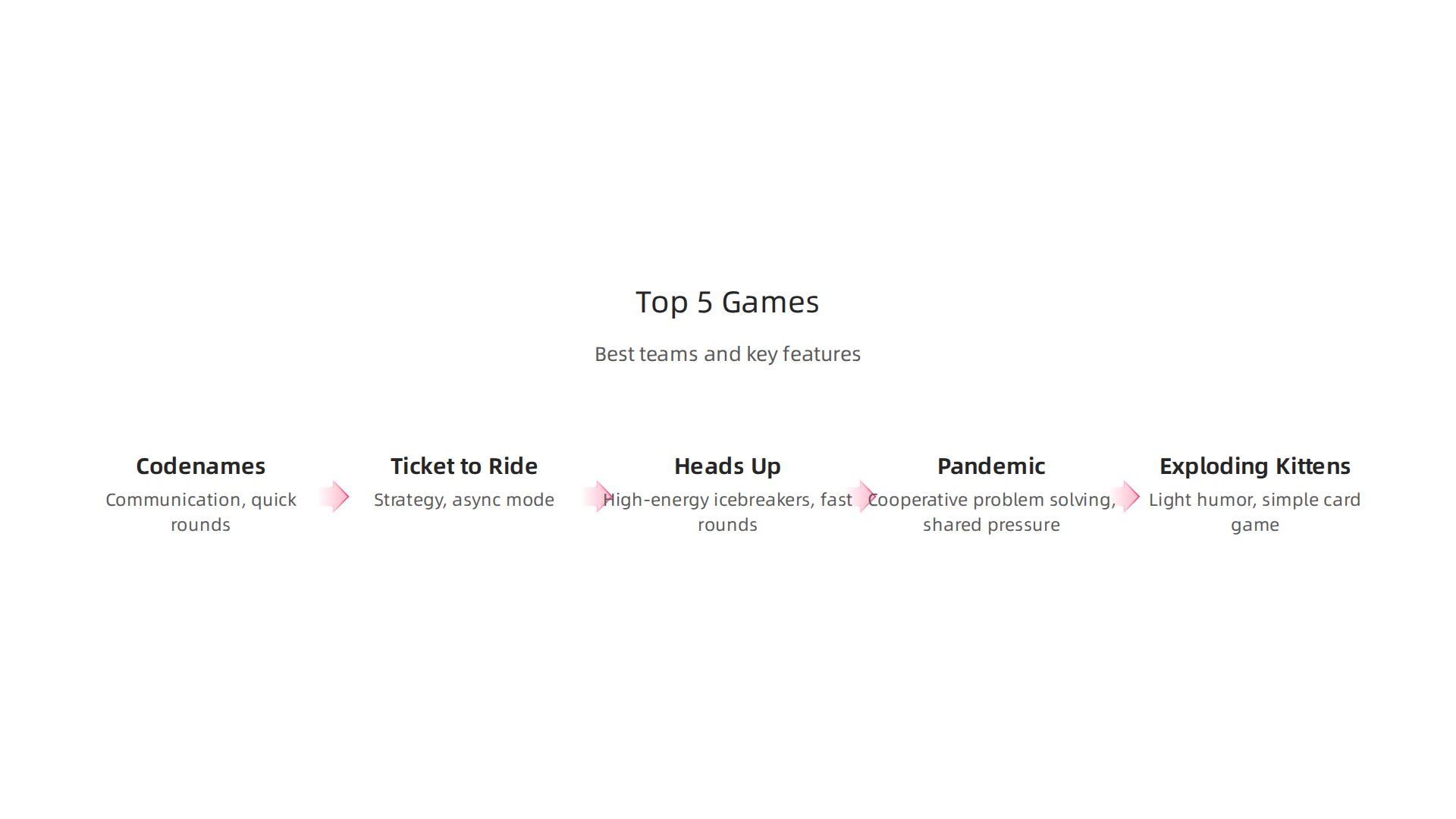
| Game | Best For | Key Feature |
|---|---|---|
| Codenames | Communication and lateral thinking | Quick rounds and easy rules |
| Ticket to Ride | Strategy and planning | Async mode for different time zones |
| Heads Up! | High energy icebreakers | Fast, silly rounds with built in chat |
| Pandemic | Cooperative problem solving | Shared responsibility under pressure |
| Exploding Kittens | Light humor and morale | Simple card game with funny moments |
Game selection matters. For example, Ticket to Ride and Pandemic support the async mode that makes them great board games for mobile across time zones. Heads Up! works almost like fun 2 player games pc but scales up easily for big teams. Many of these titles are listed as top apps in 2026 guides according to GameAnalytics.
These five cover everything from deep strategy to pure laughter. But if you want structured activities that skip the screen time, we have you covered. Contact Us to find energizers that build real connection without any setup.
Picking the right game from the table above is just step one. Now you need to match it to your team’s specific dynamic.

Match complexity to culture.
Think about your team’s personality. Do they love solving problems? Try Pandemic. Do they prefer fast humor? Heads Up! might be a better fit. "Flexibility is one of the main reasons hybrid games are thriving in 2026," notes a recent GameTyrant analysis. Choosing board games for mobile that match your group keeps everyone engaged.
Consider logistics.
Team size matters. Heads Up! works for a big group call. Ticket to Ride is great for smaller teams playing across time zones. Top apps from the 2026 Rokform guide, like Through the Ages, need serious time and focus. Check tech access too. Some people play on phones. Others prefer games to play on laptop. Picking the right platform is like choosing the right engine for a project, as outlined in the ZCO mobile game development guide. Reduce friction so everyone can join, as monday.com suggests for successful hybrid meetings.
Pilot before you launch.
Try one game with a small, interested group first. Get their honest feedback. Then roll it out to the wider team.
If this sounds like a lot of trial and error, Contact Us to discover ready-to-run team energizers that build connection without the setup.
Matching Game Complexity to Team Profile
Now you need to think about where your team is in its journey. This makes a big difference when choosing board games for mobile.
A brand-new team, one that just formed last month, needs simple party games first. Think fast rounds, easy rules, and low stakes. Games like Heads Up! or Gartic Phone help people laugh together without pressure. They build rapport quickly. This matches what GameTyrant found about hybrid games thriving in 2026 because they offer flexibility for different groups.
An established team, one that has worked together for a year or more, can handle deeper strategy games. They already trust each other. So you can pull out something heavier like Through the Ages or Ticket to Ride. These games reveal how people collaborate, solve problems, and handle pressure. The Rokform guide highlights apps like Through the Ages for teams that want serious, meaningful play sessions.
Getting this match right reduces friction. That is exactly what monday.com recommends for successful hybrid meetings. Keep it simple for new groups. Go deeper for seasoned ones.
If this feels tricky, Contact Us to discover ready-to-run activities that match your team’s exact profile without the guesswork.
Considering Tech Accessibility and Time
Before you pick any board games for mobile, check two practical things first.
The big one is tech. Does everyone on your team have a compatible device? Can they get a stable internet connection? It does not matter how good a board game app is if half your people cannot load it. This is a real pain point for hybrid teams. The monday.com guide to hybrid meetings highlights how reducing tech friction is essential for good participation. So make sure your board games on mobile work on both phones and laptops. Some teams even mix in fun 2 player games pc sessions during breaks. That only works if everyone can actually join.
The second thing is time. Global teams rarely share the same work hours. You have two choices. Plan sessions during overlapping windows. Or use async play so people take turns across different time zones. Many modern board games for mobile already support this. The GameTyrant article on hybrid games points out that flexibility is exactly why these games are thriving in 2026.
If you want ready-to-run activities that handle all these details for you, Contact Us to see how Team Booster Activities can simplify your planning.
Step-by-Step Implementation Guide: Setting Up a Digital Board Game Session That Actually Engages
You have picked your game and checked your tech. Now it is time to run the session. Follow this simple three-phase plan to make your next session with board games for mobile a real success.
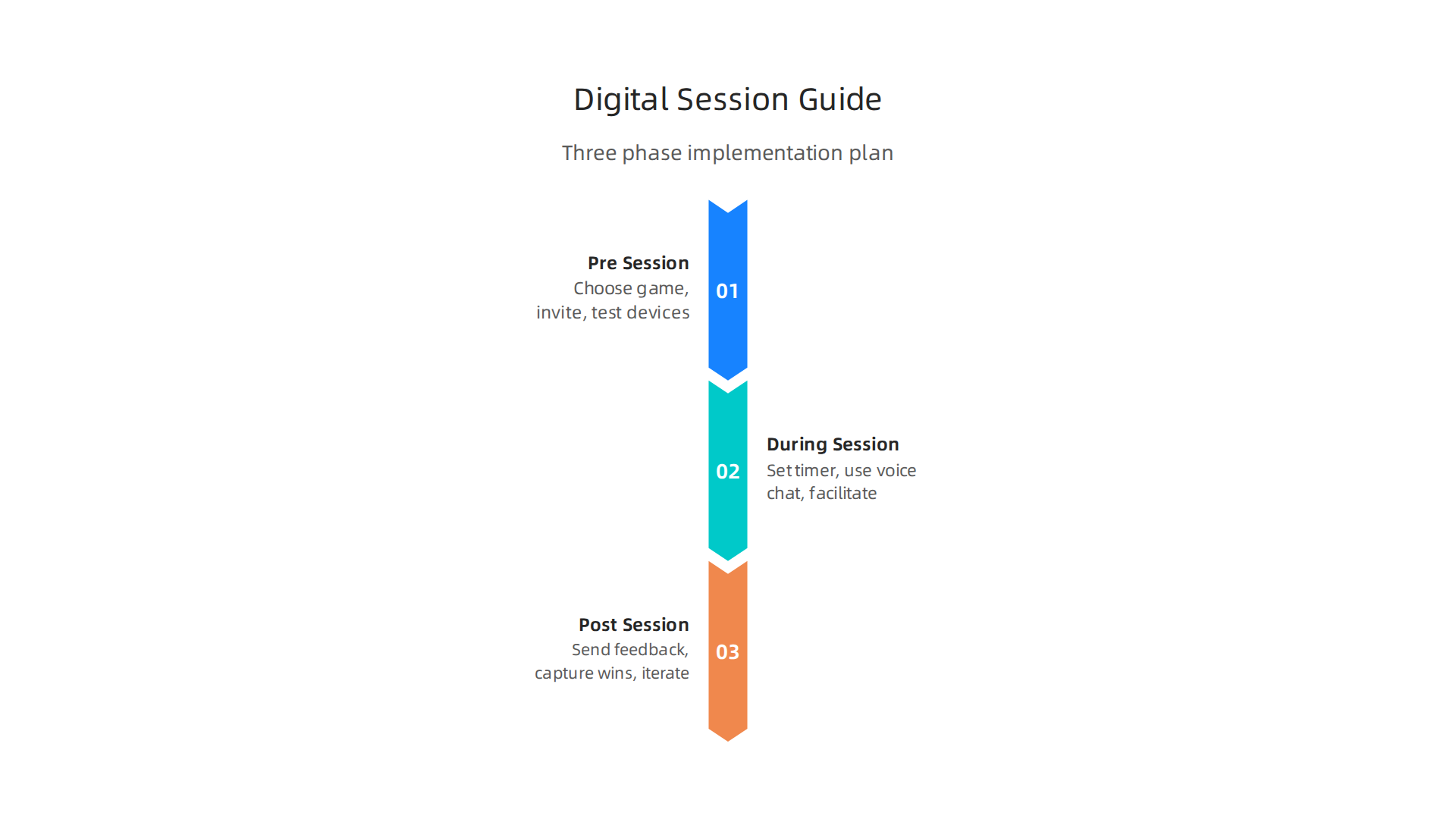
Pre-session: Get the details right. Choose your game and send a calendar invite at least three days early. Include a quick note on what to install and how to join. Ask everyone to test their device 10 minutes before start time. This removes awkward delays. Many structured virtual activities that encourage participation fail because people show up unprepared.
During session: Keep the energy up. Set a visible timer so the game does not drag. Ask everyone to turn on voice chat. Real conversation makes board games on mobile feel more human. Assign one person as the facilitator. Their job is to move things along, answer questions, and make sure nobody feels left out.
Post-session: Capture the win. Send a quick feedback form right after. Ask what people enjoyed and what could improve next time. This turns a one-off game into a repeatable team ritual. Keeping sessions fresh and responsive to feedback matters a lot for long-term engagement.
Want ready-to-run sessions that skip all the setup fuss? Contact Us to learn how Team Booster Activities can help you plan engaging digital board game sessions in minutes.
Pre-Session Setup and Communication
The ten minutes before a game starts can feel like pure chaos. Someone cannot find the link. Another person’s audio is broken. A third player downloaded the wrong app. All of that is avoidable with a little planning.
Send a how-to video or quick start guide a day before. Not everyone has played board games on mobile before. A short video or a simple list of steps removes confusion. People feel ready instead of stressed. This kind of structured virtual activity that encourages participation makes adoption much easier.
Create a dedicated channel for game-related chatter. A Slack channel or group chat works great. Players can ask questions, share tips, and build excitement before the session starts. It also gives latecomers a place to catch up quickly. This works for board games on mobile and games to play on laptop too. Looking at the best virtual team building games options, you will see that communication channels matter a lot for keeping people engaged.
Test audio and network connectivity with a trial run. Ask everyone to log in ten minutes early. A quick check of microphones and internet connections prevents those awkward "can you hear me?" moments. Many teams find that testing beforehand is one of the best practices for hybrid meetings in 2026.
The same advice applies whether you are setting up fun 2 player games pc style or a full team event.
Getting the setup right ahead of time makes the actual game flow much better. When everyone knows what to do and their tech works, you can focus on having fun with your team.
Want to skip the planning entirely? Contact Us to see how Team Booster Activities can set up engaging board games on mobile sessions for your team in minutes.
Facilitating Inclusive Play for Hybrid Teams
Even with great setup, hybrid teams face a unique challenge. Some players are on board games for mobile, while others are in the room or using a laptop. Here is how you make sure everyone feels included.
Use a shared screen or a game bot to show the game state to everyone. This helps players not on mobile follow along easily. Many effective approaches for structured virtual activities that encourage participation include this kind of visual sharing. It levels the playing field fast.
Encourage all members to unmute and speak up. Watch out for dominant voices that take over. The goal is balanced participation. This is a key part of successful hybrid team building activities. When everyone gets a turn, the game feels fair for all.
Pause the game every so often to talk about real-world work parallels. This turns fun into learning. You can ask questions like "How did that move remind you of our last project?" or "What strategy worked best here?" These short check-ins build deeper team connections.
These tips work for all board games on mobile and even fun 2 player games pc sessions. Inclusive play makes sure no one gets left behind.
Want ready-made sessions that handle all of this for you? Contact Us to see how Team Booster Activities can set up engaging board games on mobile sessions for your team in minutes.
Measuring the Impact: KPIs and Feedback Loops for Team-Building Activities
So you ran a few rounds of board games for mobile and got some good laughs. But did it actually work? In 2026, you need proof. Tracking the right numbers helps you know if your team is growing or just having fun.
Start with the basics. Track participation rates and enjoyment ratings. Send a quick poll after each session. Ask people to rate the fun on a scale of 1 to 5. Also collect qualitative feedback like "What did you like most?" These simple measures show you what works and what doesn’t. According to this guide on measuring team building success, consistent tracking is the first step to proving ROI.
Next, link your game sessions to real team performance metrics. Look at things like project delivery time, internal NPS scores, or meeting efficiency. If communication improves after a round of games to play on laptop, you might see faster project completion. Research shows metrics like collaboration frequency and employee engagement scores are reliable signs of team building success. That insight comes from this breakdown of team building metrics. When your data lines up, you can prove the value to leadership.
Finally, iterate based on data. Rotate games if one format gets low scores. Adjust frequency if people seem tired. Try new types of fun 2 player games pc sessions if hybrid teams ask for shorter rounds. Small changes based on feedback keep things fresh. As this article on measuring ROI points out, measuring effectiveness lets you maximize impact over time.
Ready to track your team’s progress without the guesswork? Contact Us to see how Team Booster Activities can help you measure and improve your team building sessions starting today.
Key Metrics for Team Building ROI
You already know tracking results matters. But which numbers actually show a return on your investment? Split your metrics into two buckets: direct and indirect.
Direct metrics are easy to measure. Look at session attendance and completion rates. After a round of board games for mobile, send a quick survey and collect a post-session satisfaction score. These tell you if people showed up and enjoyed themselves. Start with these basics, and you will see clear patterns emerge.
Indirect metrics show deeper impact. Use short surveys to measure changes in team collaboration. Ask questions like "How often do you ask a teammate for help now compared to last month?" Also track internal conflict tickets. If the number drops after regular board games on mobile sessions, your activities are working. According to this guide on team building effectiveness, metrics like project completion rates and work quality can reveal the real impact of your efforts.
Both types together give you the full picture. Direct data keeps your sessions fun and well attended. Indirect data proves your team is working better together.
Want a simple way to start measuring your team building ROI? Contact Us and let Team Booster Activities help you set up tracking that actually works.
Creating a Continuous Feedback Loop
Tracking metrics once is a good start. But the real magic happens when you make feedback a habit. Here is how to build a loop that keeps your team building efforts sharp.
First, use short pulse surveys right after each session. Whether your team just played board games for mobile or tried a quick icebreaker, send a quick poll.

Ask one or two questions like "What worked well?" and "What would you change?" Keep it simple so people actually answer. According to this guide on measuring team building success, regular pulse surveys help you capture honest reactions while the experience is still fresh.
Second, aggregate your data every quarter. Pull all those survey results together and look for patterns. Maybe your team loves problem-solving challenges but gets bored with long icebreakers. Maybe board games on mobile get higher engagement scores than anything else. Use that information to adjust your game portfolio. You can swap out low-scoring activities and double down on what works.
This feedback loop turns guesswork into a system. Over time, you will build a library of proven activities that your team actually enjoys. And that is where the real return on investment lives.
Want help setting up your own feedback system? Contact Us and let Team Booster Activities show you how to keep improving your team building results.
Conclusion: From Play to Performance – Making Digital Board Games a Staple in Your Team’s Routine
So here is the truth. Digital board games for mobile are not just quick distractions. They solve real problems like low engagement, poor collaboration, and stalled innovation. When you choose the right games and run them with intention, the impact is real.
The evidence backs this up. Teams that play together actually perform better. According to research on measuring team building ROI, reduced turnover and higher productivity are clear signs that structured play works.

And it does not take much to start seeing those results.
The smartest approach is to start small. Pick one or two fun 2 player games pc or a few mobile board games and test them with your team. Gather feedback right after each session. Look for patterns. What gets people excited? What falls flat? Use that data to make decisions.
Over time, you will build a routine that your team actually looks forward to. Whether your people are in the same room or spread across time zones, a quick round of games to play on laptop or a short board game on mobile can reset the energy and strengthen connections.
The companies that make play a habit are the ones that see the biggest returns. It is not about forcing fun. It is about giving your team a simple, repeatable way to connect, solve problems, and recharge together.
Ready to build your own system? Contact Us today and let Team Booster Activities help you turn digital board games into a lasting part of your team’s rhythm.
Summary
This article explains how mobile board games can repair the connection gap created by remote and hybrid work, showing practical ways to boost engagement, collaboration, and morale without heavy cost or logistics. It walks through why traditional virtual events often fail, summarizes the science behind game-based learning, and explains how game mechanics teach real teamwork skills. You’ll find a short list of recommended mobile titles for different team needs, clear selection criteria (async play, short learning curve, built‑in chat), and guidance on matching games to team maturity. The piece also offers a three-phase implementation plan—preparation, facilitation, and follow-up—plus tips for inclusive play across time zones and devices. Finally, it covers how to measure success with direct and indirect KPIs and how to create a continuous feedback loop so sessions improve over time. Read it to learn how to pick, run, and evaluate digital game sessions that become a repeatable part of your team’s routine.