
Two Player Games Online: How to Build Stronger Remote Teams

Why two-player online games are an underrated team-building tool
It can be tough to get everyone on a team to work well together. Sometimes, old ways of building a team feel like extra work, not fun. This is especially true now in 2026, with many teams working from home or a mix of home and office.

But what if there was a simple, fun way to help teams connect and do better? Actually, there is. Two player games online are a secret weapon for building strong teams.
These types of online multiplayer games with friends are great because they make just two people really focus on each other.
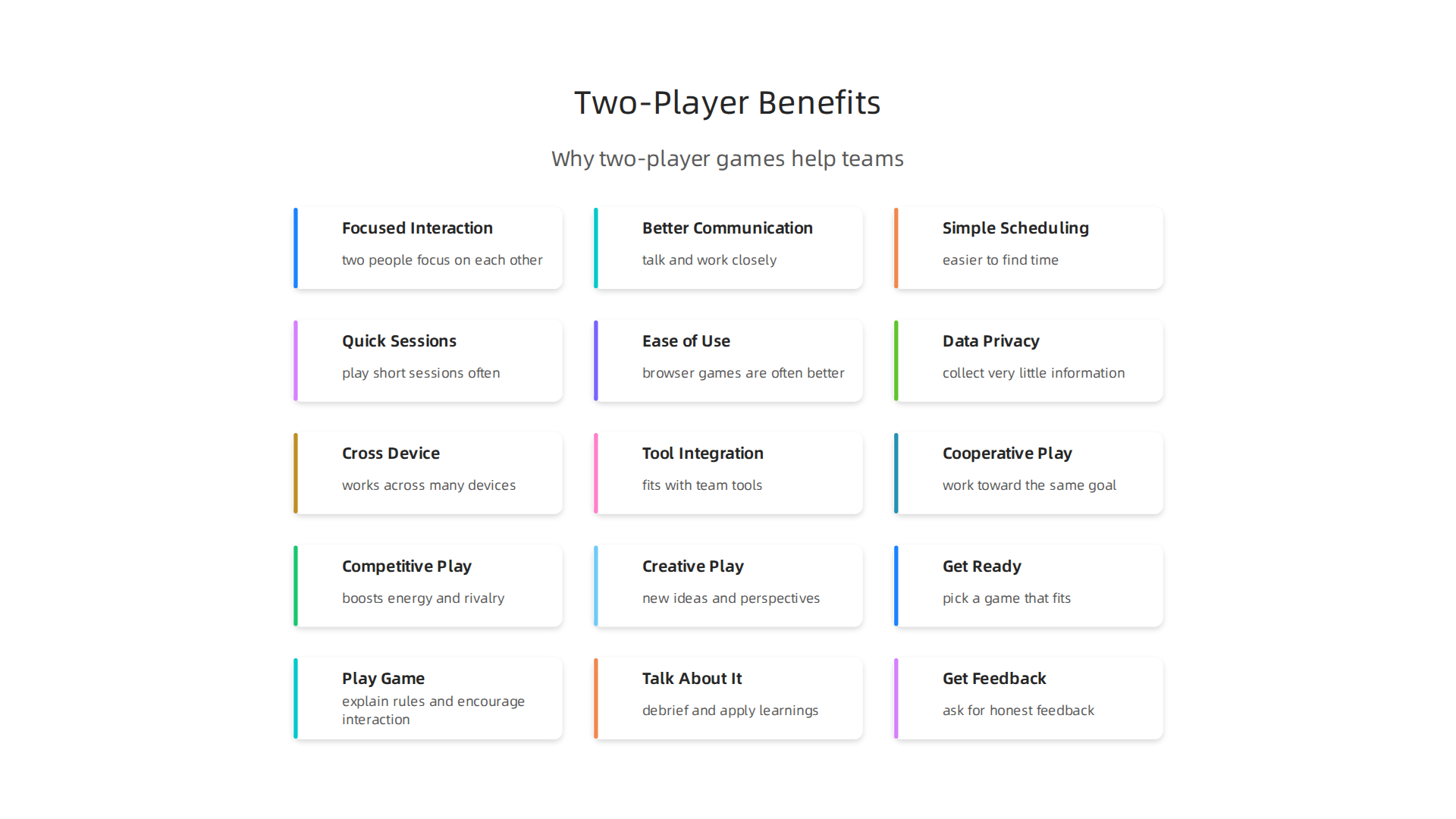
When you play a two player game, you have to talk and work closely with your partner. This helps you see how they think and how you can best work together. It’s like a quick practice round for real team challenges. This kind of focused interaction helps people learn how to communicate better and work together more smoothly. Studies show that when companies put more effort into their teams, they often see people perform better, get more done, and solve problems better at work, as noted in a paper on TEAM BUILDING AND PERFORMANCE IN ORGANIZATIONS.
Another big plus for two player games online is that they work well for teams spread across different places. Since you only need two people for each "team one" challenge, it’s much easier to find a time that works for everyone. This makes scheduling simple for all sorts of teams, whether they are fully remote or hybrid. You do not need a big meeting to get everyone involved in a team activity.
And the best part? These games can be simple and quick. You can play short sessions often, which helps keep everyone connected without a lot of extra planning. This makes it easy to keep the team spirit high all year long. If you want to know more about how these games can re-energize your team, check out Why 2-Player Browser Games Are the Secret to Re-Energizing Your Team.
Need a Fun Team Spark? Meet a sci-fi comedy built for laughter and unexpected perspective: Need a Fun Team Spark?
Short, easy-to-start games are key to keeping teams happy and working together. When you pick two player games online that don’t need a lot of setup, more people will want to play. This takes away the stress of learning complex rules or planning big events. Simple, fun activities mean everyone can jump in, no matter if they are a "team one" player or just joining in. This approach helps boost team morale and engagement, as using game elements in the workplace can really help employees get more involved, according to research on Gamification in Human Resources.
Think about games that bring a smile or a surprise. When online multiplayer games with friends have funny moments or unexpected turns, they create shared good feelings. These positive experiences stick with people and help them feel more connected. A bit of laughter goes a long way in making people feel comfortable and engaged with their teammates. It’s a quick way to build strong bonds without anyone feeling forced.
Another great trick is to use pair rotations. This means you have people switch partners often. One week, John might play a two player game online with Sarah. The next week, Sarah might play with Mike. This helps team members get to know everyone better, not just their usual work buddies. It brings out hidden connections and strengthens the whole team’s network. These kinds of low-pressure, high-fun activities can be done often, keeping the team spirit alive. If you want more ideas for quick, easy ways to connect your team, check out these 12 web games to boost team focus and connection during breaks.
A ridiculous sci-fi read can give your team a shared laugh. Boost Morale With Humor.
After finding games that bring smiles and shared moments, the next big step is picking the right place to play them. This means choosing a platform that works well for everyone on your team. Thinking about how easy it is to use, if it keeps your information safe, and if everyone can play no matter their device is super important.
Making Games Easy for Everyone
One key thing to look for is how you can play the game. Are they games you play right in your internet browser, or do you need to download a special app? Browser-based games are often better because they work on almost any computer or phone without needing extra steps. This makes it much easier for everyone to join a quick round of two player games online, whether they are at home or in the office. This is also important for people with different abilities, as websites and games need to follow new rules for accessibility in 2026, like the New Website Accessibility Standards for 2026.
Apps can sometimes be tricky with different operating systems or strict company rules about what can be downloaded.
Keeping Your Team’s Information Safe
When choosing online multiplayer games with friends for work, you also need to think about privacy. Businesses need to be careful with data, so games that collect very little information about players are best. Look for platforms that have clear rules about privacy and keep your team’s details secure. Data privacy is a big deal in 2026 for all kinds of online publishers, including games, as detailed in reports on Top data privacy issues for app, game, and web publishers.
Choosing platforms with good security means you do not have to worry about unwanted surprises. Finding one of the 10 Best Enterprise Browser Platforms for 2026 can help make sure your browser games are safe.
Playing Together on Any Device
Games that work across many devices make sure no one is left out. Imagine a fun online party games where some team members are on a laptop, others on a tablet, and some on a smartphone. A good platform lets everyone join the same game session smoothly. This cross-device play is super important for teams that work from different places or use different types of technology. If the game cannot be played easily by everyone, it stops being a fun team challenge and becomes a hassle.
Finally, think about how well the game platform fits with tools your team already uses. If it can easily connect to your work calendar or chat programs, scheduling game time becomes much simpler. This smooth integration makes it easier for everyone, from "team one" leaders to new members, to jump in and enjoy the activity without extra effort.
Now, after picking the best platform for your games, the real magic happens when you turn simple play into a strong learning moment for your team. It is not just about playing two player games online; it is about how you set them up and talk about them afterward. This helps games become a special kind of team exercise.
Turning Games into Team Development Sessions
To make games truly useful, you need to think about them with a plan. This means setting clear goals before you start. What do you want your team to learn or practice? Maybe it is better communication, working together, or solving problems. Also, giving out roles or making sure everyone understands their part can make a huge difference, even in online multiplayer games with friends. After the game, talking about what happened, what worked, and what could be better is super important.

This way of using games for learning is called "gamification," and it can really help with how employees work together and how well they perform, as studies on gamification in human resources show in 2026 reports Gamification in Human Resources – IJTSRD.
Deepening Learning with Reflection Questions
After a round of fun online party games, do not just stop there. Take a few minutes for pair-based reflection. Ask simple questions like:
- What was one good thing your partner did during the game?
- What was tricky, and how did you overcome it together?
- How does what you learned in the game apply to our work as a team?
These chats help people connect what they did in the game to their everyday work. It helps them see how sharing information and making choices together can make a difference. In fact, research shows that how well people communicate in online games can predict how good they are at teamwork in real work settings Communication Patterns Predict Team Skill in Multiplayer Online …. This makes the experience much more than just a quick team challenge; it becomes a real learning tool. If you want to find more ways to make your team activities impactful, explore some fun corporate activities that rebuild team energy and boost performance.
Encourage New Connections and Ideas
Another smart move is to change partners often and mix up roles. If "team one" always plays together, they might not get to know other people as well. By having different people play two player games online together, everyone gets a chance to see things from a new angle. This helps break down small groups or "cliques" and builds stronger connections across the whole team. It also helps people understand different viewpoints, which is a big plus for teamwork and problem-solving. Making sure everyone feels included and gets to work with different colleagues helps build a more united and understanding team.
Need a Fun Team Spark? Meet a sci-fi comedy built for laughter and unexpected perspective. Need a Fun Team Spark?
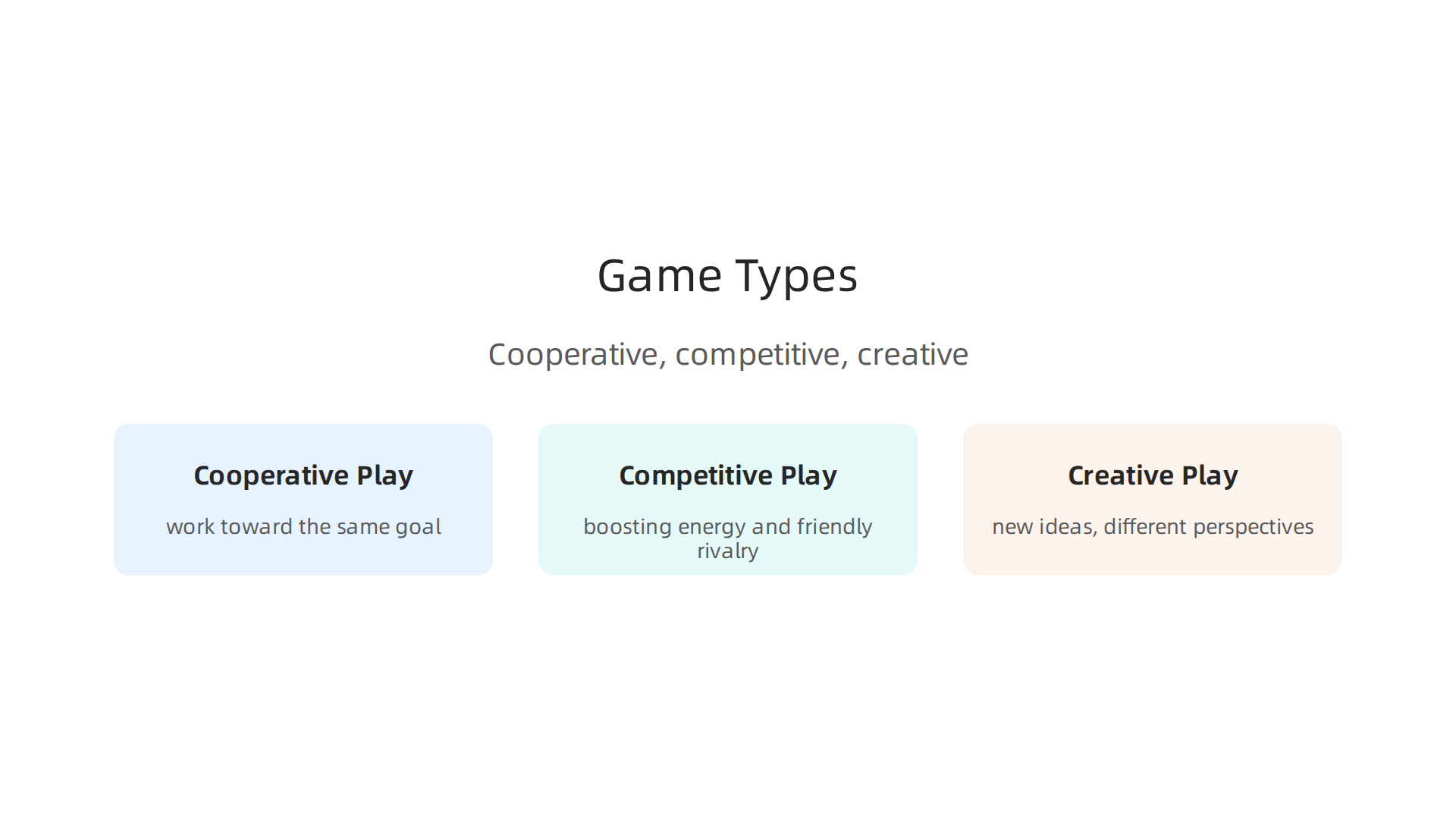
To truly make your team stronger and more connected, picking the right kind of game is key. Different types of games help your team learn different things. Let’s look at three main kinds: cooperative, competitive, and creative.
As you pick games, remember that making them accessible for everyone is important, especially with new rules like the European Accessibility Act impacting online gaming and gaming devices in 2026 to make sure everyone can join in the fun The impact of the European Accessibility Act on Online Gaming and Gaming Devices.
Cooperative Play
First, we have cooperative games. These are perfect for when you want your team to work very closely together. In cooperative games for team building activities that rebuild connection and trust, like many two player games online or even larger online multiplayer games with friends, everyone works toward the same goal. No one wins alone; the whole group succeeds or fails as a team one unit. This type of play really helps people practice solving problems together and taking shared responsibility. It builds trust because everyone depends on each other to reach the finish line.
Competitive Play
Next, there are competitive games. These can be great for boosting energy and creating a fun, friendly rivalry. When teams play against each other, it can make them think faster and aim higher. Just look at how many enjoy Blooket team building activities that turn stale icebreakers into fun competitions. But it is important to set things up right. Make sure the goal is friendly competition, not a harsh win-at-all-costs feeling. You want it to be a healthy team challenge, where everyone still feels good about the effort, even if they do not win. The aim is to spark excitement and quick thinking, not to make anyone feel bad.
Creative and Interpretive Play
Lastly, think about creative or interpretive games. These kinds of games are all about new ideas and different ways of seeing things. They are perfect for warming up your team’s minds before an innovation session or when you want to encourage out-of-the-box thinking. For example, some online party games might ask you to tell a story together or draw something based on a silly prompt. These games help people feel comfortable sharing unique thoughts without judgment. They are not about winning, but about exploring new possibilities and having fun with imagination. Sometimes, the best way to spark creativity and good feelings is through a shared laugh or a fresh story. Why not try something truly different? Boost Morale With Humor. Boost Morale With Humor. A ridiculous sci-fi read can give your team a shared laugh.
It’s one thing to know about different games, but another to actually use them well. To make team building simple and effective, especially with two player games online, having a clear plan is key.
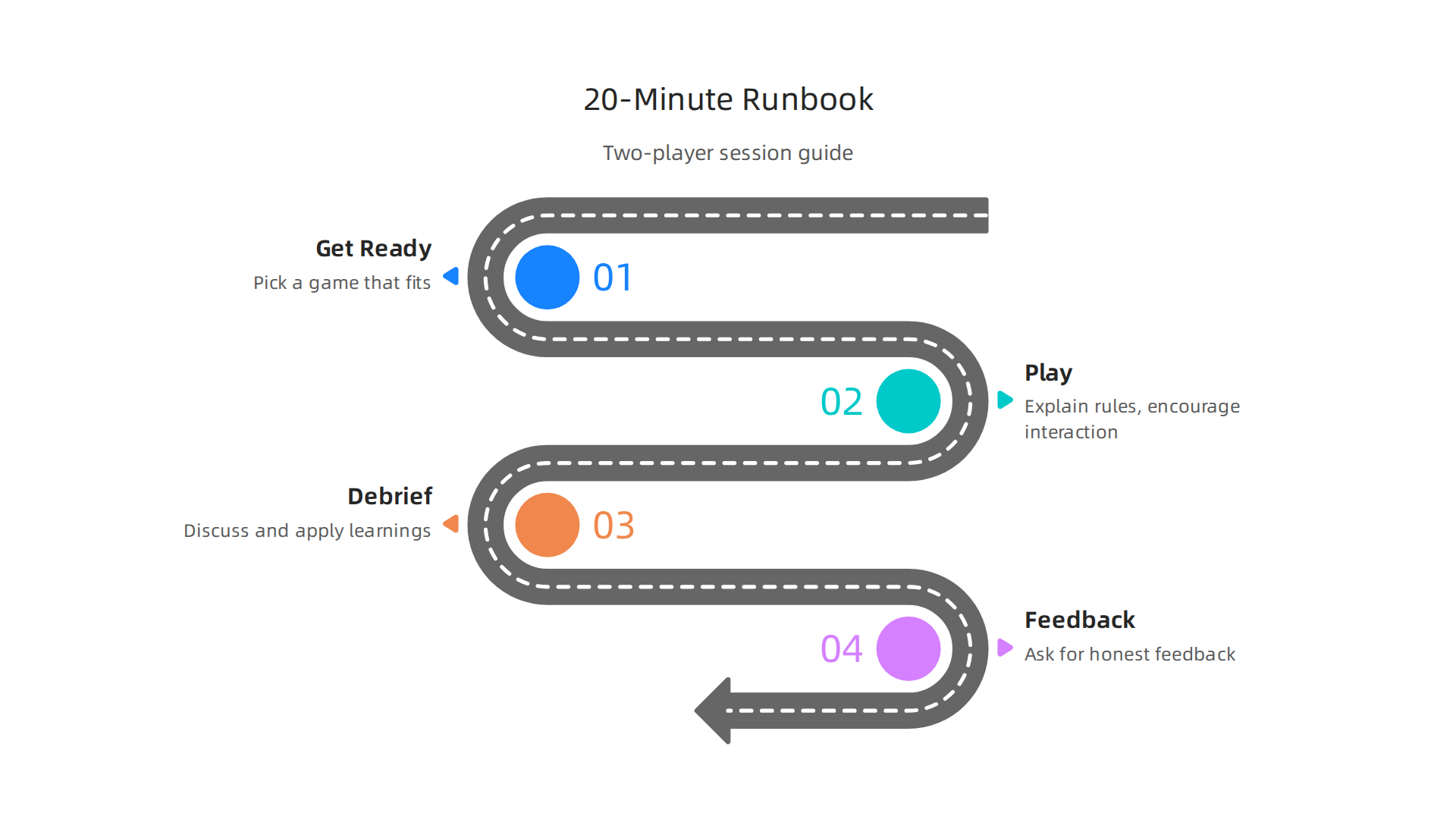
That’s why we’ve put together a 20-minute runbook. It helps managers easily set up quick team activities without needing to spend a lot of time planning.
Runbook: a 20-minute two-player session managers can copy
Using this simple runbook will help you run a smooth activity, even if it’s your first time. This plan works for quick breaks and can be changed for different types of teams.
Step 1: Get Ready (5 minutes)
Before the session starts, pick a game that fits your team’s needs. Think about whether you want them to cooperate or compete. If you’re looking for two player games online or even online multiplayer games with friends, make sure the tools you need are ready. This might mean sending out links to a game or making sure everyone has access to the right software.
- For remote teams: Share screen instructions or links to an
online party gamesplatform. - For hybrid teams: Have a plan for both in-person and remote players. Make sure everyone can see and hear each other clearly.
- For in-person teams: Prepare any physical materials or clear instructions on how to use a shared screen.
A good facilitator, someone to explain the rules and guide the group, is very helpful for any team building game Team Building Games That Really Teach Teamwork [6 Examples].
Step 2: Play the Game (10 minutes)
Once everyone is ready, explain the rules of your chosen game. Keep it simple and clear. As they play, the facilitator can offer gentle prompts to keep the energy up and encourage interaction.
- Prompt idea: "What strategies are you trying?" or "How are you working together as a
team oneunit?" - Focus: Encourage teamwork and positive communication. For competitive games, remind everyone it’s a friendly
team challenge.
Many two player games online are perfect for quick bursts of interaction, helping teams re-energize and connect. If you want to know more about how these games can help, you can explore why 2 player browser games are the secret to re-energizing your team.
Step 3: Talk About It (5 minutes)
After the game, a short debrief is very important. This is where the learning happens. Ask questions to help the team think about what they learned and how it applies to their work.
- Discussion questions:
- What went well during the game?
- What was challenging?
- How did you communicate with your partner?
- How can we use what we learned today in our work tasks?
Get Feedback and Improve
To make these activities even better, pay attention to how engaged your team is. After a few sessions, you might ask for short, honest feedback. This helps you pick better games next time and tailor them more to your team’s needs. This simple, repeating process helps your team grow stronger over time.
Need a Fun Team Spark? Need a Fun Team Spark?
When you run team-building activities, it’s really helpful to know if they’re actually working. After putting together a fun plan, like using quick online multiplayer games with friends, you’ll want to see the good changes in your team. This means looking at a few simple things to check the impact and make sure your efforts are worth it.
Measuring Impact and Building a Repeatable Program
To truly understand if your team activities are helping, it’s smart to measure their success. You don’t need fancy tools. Simple ways to check include short surveys, how many people join in, and what team members say about the experience. This helps you know what’s going well and what could be better.

Simple Ways to Measure Success
You can use easy methods to see the impact of your team-building games, even if they are just quick two player games online.
-
Quick Surveys: After an activity, ask your team to fill out a very short survey. Ask questions like:
- Did you feel more connected to your teammates?
- Did this activity help you feel more energized?
- Would you like to do this type of activity again?
This kind of feedback is great for understanding how people feel right after the game. It helps you track employee engagement, which is super important for how well your company does The ROI of Employee Engagement.
-
Participation Rates: Just keeping track of who shows up is a good start. If more people join over time, it means they find value in the activities. High participation can lead to better teamwork, as studies show that playing games can improve how people work together Teamwork Training With a Multiplayer Game in Health Care.
-
Qualitative Quotes: Ask for direct comments from team members. What did they like? What did they learn? These real stories are powerful. For example, someone might say, "Playing that online party games game really helped us understand each other’s thinking process." This kind of feedback shows you how games can build key skills like communication Communication Patterns Predict Team Skill in Multiplayer Online ….
Setting Clear Goals for Your Program
To make your team-building program something you do regularly, HR teams need to define what they want to achieve.
- Short-term goals could be improving morale or making team members smile more.
- Medium-term goals might include better communication or stronger problem-solving as a team one unit.
When you have clear goals, it’s easier to show why these activities are important and worth the time and effort. Many companies find that games can boost employee productivity and engagement quite a bit 90+ Gamification Statistics & ROI Case Studies (2026).
Keeping a Record of Wins
It’s a good idea to write down what happens in each session. Note the game played, how many people joined, and any good feedback you got. When you collect these small wins, it builds a strong case for why team building is valuable. It helps you get support from others in your company to keep these activities going and even grow them. This way, your team-building program can become a steady part of your company’s culture, leading to better collaboration and connection over time.
Summary
This article argues that two-player online games are an underrated, practical tool for team building—especially for remote and hybrid teams—because they force focused, conversational interaction between just two teammates. It explains why short, browser-based games work best (easy access, fewer downloads, better accessibility), how to pick a safe platform, and which game types (cooperative, competitive, creative) teach different skills. The piece gives a copy-ready 20-minute runbook (5 minutes prep, 10 minutes play, 5 minutes debrief), shows how to scale connection with pair rotations, and describes simple measurement methods like quick surveys, participation tracking, and quotes. Readers will learn how to choose games, run smooth sessions, protect data, and turn playful rounds into repeatable learning moments that build trust and improve team performance.