
Connect Your Team With Engaging Ice Breakers for Team Meetings

Why a 5‑minute ritual can change your team meeting
Have you ever felt tired or disconnected during a team meeting? Maybe everyone looks at their screens, quiet and a little bored. This feeling is common, especially with more teams working from different places in 2026. Low energy and poor connection can make meetings feel like a waste of time. It’s hard to be creative or work well together when people don’t feel truly engaged.
Actually, teams with higher engagement often do better than others in many ways, like getting more work done and keeping customers happy. This is shown in studies about employee engagement. What if there was a simple way to bring life back to your team meetings? A short ritual, lasting just five minutes, can make a big difference. These quick activities are known as ice breakers for team meetings. They help everyone feel more ready to talk and work together.
In this guide, you will learn how to use these short, fun moments to make your team stronger. We will give you many practical ice breaker ideas and explain how to lead them well so everyone feels included. You’ll also find tips for making sure these easy team building activities truly help your team connect and perform better. Get ready to turn your regular meetings into lively sessions where everyone feels like they belong and is ready to jump in.

We’ll show you how even simple games for team building activities that rebuild connection and trust can make a huge impact on your team’s spirit and success, leading to higher productivity and customer happiness, according to data from Perceptyx’s report on Anticipating Success: Understanding and Activating Employee Engagement.
Why ice breakers matter (beyond small talk)
You might think ice breakers are just a bit of small talk before the real work starts. But actually, they do much more than just fill a few minutes. Ice breakers for team meetings work because they tap into important ways people connect and focus. They help your team get ready to truly work together, not just sit in the same room or on a video call.
How Ice Breakers Help Your Team
These easy team building activities do a few important things for your team’s mind and mood:
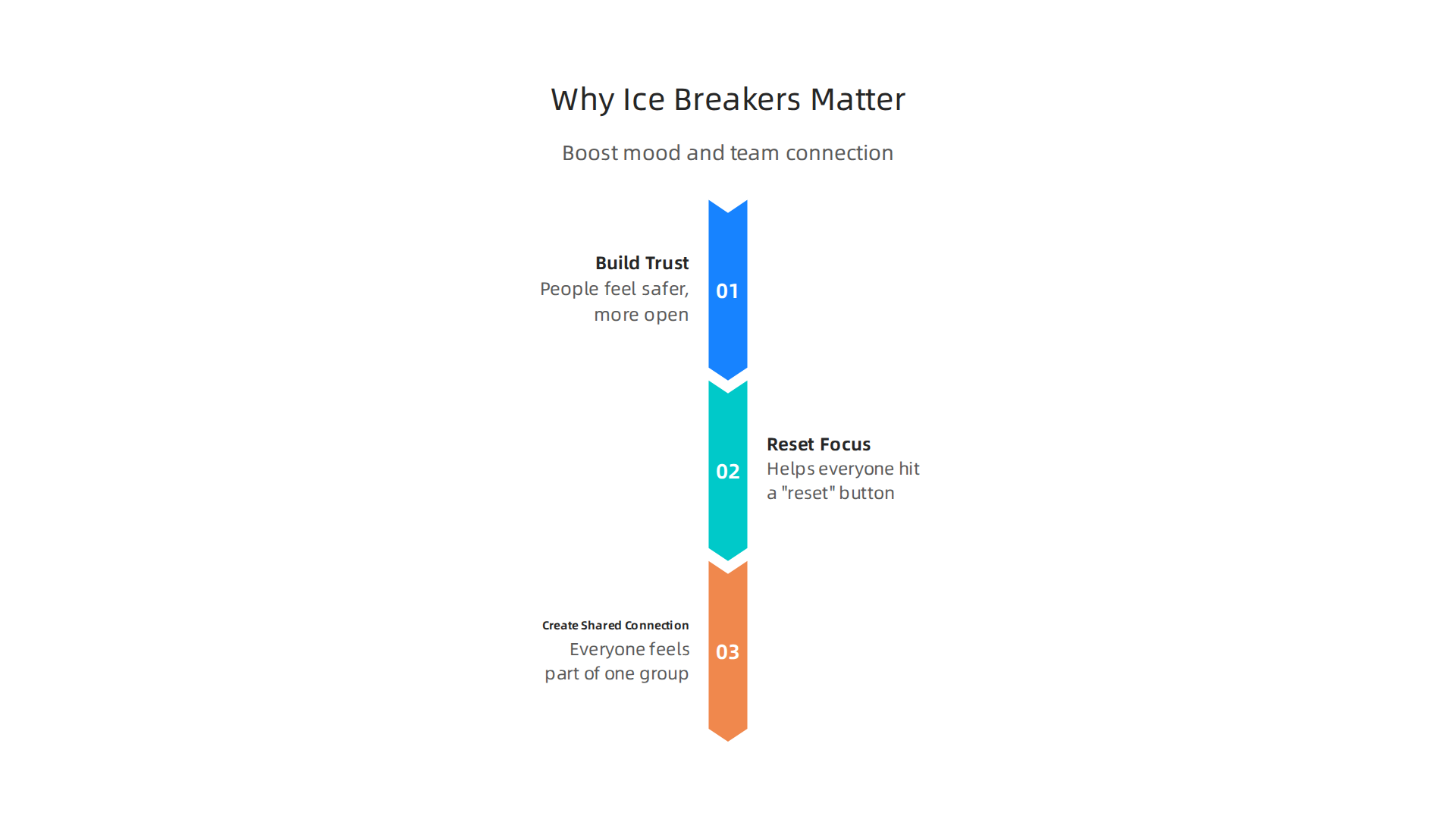
- Build Trust and Comfort: When you start with a lighthearted activity, people feel safer and more open. This feeling is called psychological safety, and it’s key for a team to do its best work. Studies show that using things like ice breakers can help build this safety, making everyone feel okay to share ideas and even make mistakes without worry. This boosts trust among team members and helps them connect on a deeper level 5 psychological safety exercises to improve employee engagement.
- Reset Focus: Think of an ice breaker as a mini-break for your brain. Before a meeting, people might be thinking about their last task or what they need to do next. A quick ice breaker helps everyone hit a "reset" button. It shifts their attention away from other things and brings them into the meeting moment, ready to listen and take part.
- Create Shared Connection: Fun team games help everyone feel like they are part of one group. They create common experiences or shared laughs right away. This shared start can make everyone feel more included and that they belong. The Global Workplace Happiness Report 2026 highlights how important belonging is for a happy and productive work environment The Global Workplace Happiness Report 2026. When team members feel this connection, they work better together. If you’re looking for more ways to create shared energy and boost performance, check out these Fun Corporate Activities That Rebuild Team Energy and Boost Performance.
When to Use (and When to Skip) Ice Breakers
Knowing when to use ice breakers for team meetings is just as important as knowing how.
Use them when:
- You need to build connection: This is especially true for new teams, remote teams that don’t see each other often, or if you have new people joining to meet the team.
- You want more energy and creativity: If your meeting needs fresh ideas or active problem-solving, an ice breaker can get everyone’s minds flowing.
- The meeting topic is sensitive: Starting with something light can help ease tension before moving to harder discussions.
- People seem tired or distracted: A quick activity can wake everyone up and get them engaged.
Skip them when:
- The meeting is very urgent: If there’s a crisis and every second counts, an ice breaker might not be the right choice.
- The team already has strong bonds: If your team works together every day and has great communication, a short check-in might be enough.
- The goal is purely to share information: For simple updates where little discussion is needed, an ice breaker might feel out of place.
Ice breakers can also bring shared laughter. For even more fun and connection, a ridiculous sci-fi read can give your team a shared laugh, bringing everyone closer. Take a look at this fun option: Boost Morale With Humor.
Working together when you’re not in the same room can be tricky. Many teams today work from different places, which makes it even more important to find ways to connect. In 2026, remote work is very common, and studies show how important it is for employees to feel engaged and part of the team when working from home, according to the REMOTE WORK AND ITS IMPACT ON EMPLOYEE ENGAGEMENT research. That’s where quick ice breakers for team meetings really shine. These easy team building activities help everyone feel closer and ready to work, even if they’re miles apart.

The best ones take five minutes or less.
Quick Ideas for Remote Team Warm-ups
Here are some fun team games and warm-ups that work well for remote teams and don’t take much time:
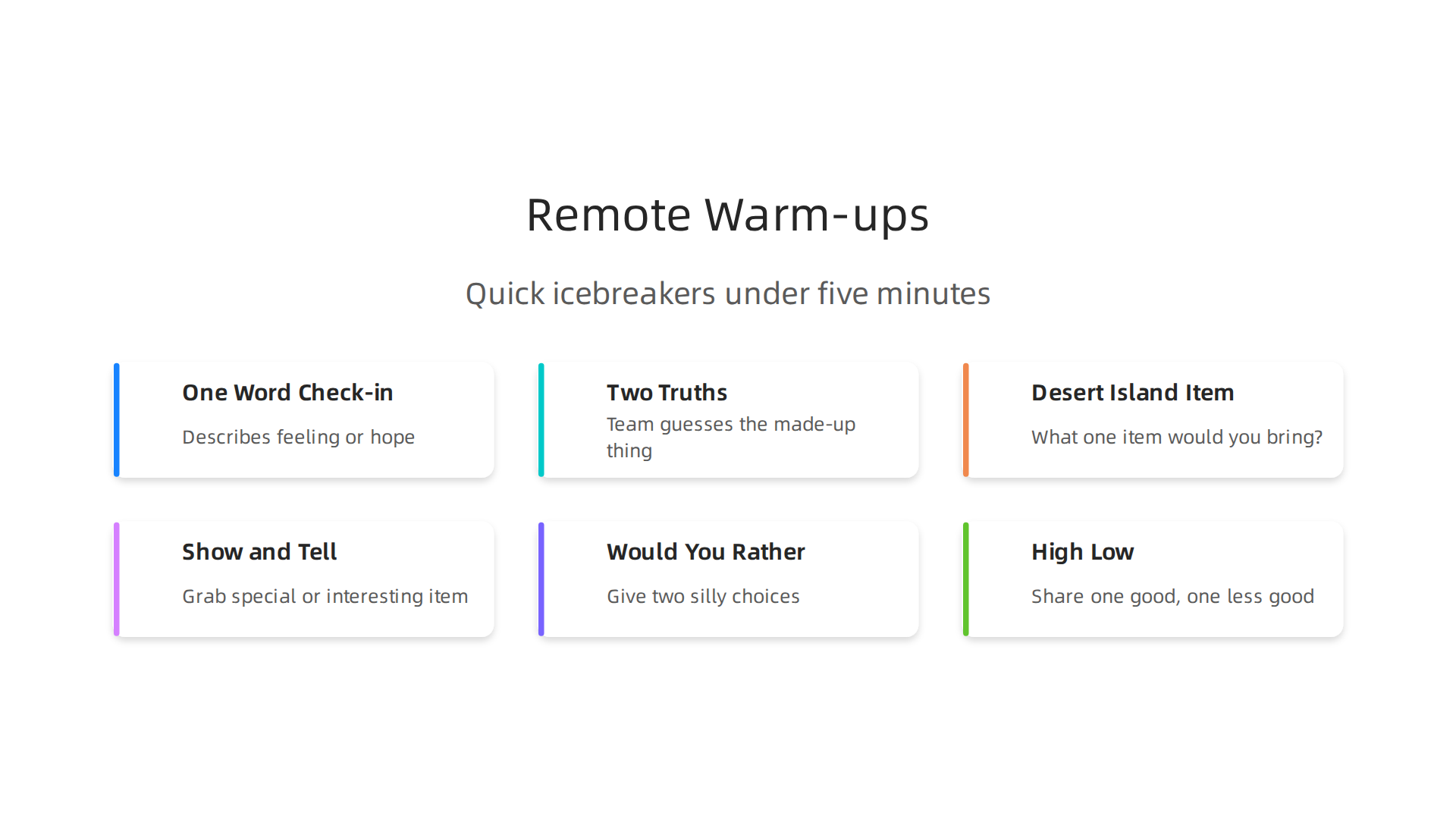
- One Word Check-in
- How it works: Ask everyone to type one word into the chat that describes how they are feeling or what they hope for the meeting.
- Time: 1-2 minutes
- Tech needed: Video call with chat box
- Two Truths and a Lie (Quick Version)
- How it works: Each person shares two true things about themselves and one made-up thing. The team guesses which one is the lie.
- Time: 3-5 minutes (depending on team size)
- Tech needed: Video call
- Desert Island Item
- How it works: Ask, "If you were stuck on a desert island, what one item would you bring and why?" Everyone shares quickly.
- Time: 3-4 minutes
- Tech needed: Video call
- Show and Tell (Quick Object)
- How it works: Ask everyone to quickly grab one item near them that means something special or is interesting. They hold it up and say one sentence about it.
- Time: 4-5 minutes
- Tech needed: Webcam
- Would You Rather?
- How it works: Give two silly choices (e.g., "Would you rather have a pet dragon or a pet unicorn?"). Everyone chooses and explains why in one quick sentence. You can find many ideas online for 13 fun virtual icebreakers for hybrid meetings.
- Time: 3-5 minutes
- Tech needed: Video call or poll feature
- High/Low of the Week
- How it works: Each person shares one good thing (high) and one less good thing (low) from their week. Keep it very short.
- Time: 4-5 minutes
- Tech needed: Video call
- Virtual Scavenger Hunt (One Item)
- How it works: Call out something simple, like "Find something blue!" or "Find something round!" Everyone quickly shows an item to their camera.
- Time: 2-3 minutes
- Tech needed: Webcam
- Favorite Emoji
- How it works: Ask everyone to share their favorite emoji and why it’s their favorite in the chat or verbally.
- Time: 2-3 minutes
- Tech needed: Video call with chat box
- Team Superpower
- How it works: Ask the team, "If our team had a superpower, what would it be?" Everyone shares their idea. This helps you meet the team in a new way.
- Time: 3-4 minutes
- Tech needed: Video call
These kinds of warm-ups are great for shaking off distractions and bringing everyone together at the start of a meeting. They help build connection in a simple way. You can even use Boggle online team building to make things more exciting for remote teams.
Tips for Making Remote Ice Breakers Work
To make sure your remote ice breakers are a success, keep these simple tips in mind:
- Be Clear and Simple: Make sure everyone understands the activity right away. Keep the rules very easy.
- Time it Well: Stick to your time limit. It helps keep the meeting moving and shows you respect everyone’s schedule. Use a timer if you need to!
- Make it Easy to Join: Not everyone likes to speak up first. Make sure people can use the chat, a poll, or their camera if they don’t want to talk right away. Having options helps everyone feel included. For more ideas on effective ice breakers for team meetings, check out this guide to virtual meeting icebreakers.
- Have Fun: Your energy matters. If you seem excited about the warm-up, others will too.
- Encourage but Don’t Force: Some people are naturally shy. Don’t push anyone to take part if they really don’t want to, but do create a warm space where they feel safe to do so.
These short, fun activities can make a big difference in how your remote team connects and works together. They are perfect for bringing a little bit of fun and energy into your virtual space.
Need a Fun Team Spark? Meet a sci-fi comedy built for laughter and unexpected perspective at doridiculous.com.
While virtual warm-ups are fantastic for remote groups, sometimes your team gathers in person. When everyone is in the same room, you have a chance to use high-energy, movement-based ice breakers for team meetings. These activities are great for getting people up and moving, which can really spark energy and conversation. They also help everyone feel more connected, making these easy team building activities perfect for the office or a special team event. Many companies in 2026 are looking for creative ways to connect their teams during in-person meetings, according to research on 15 creative icebreakers for your 2026 company retreat.
Here are some fun team games and warm-ups that don’t need much setup and get people moving:
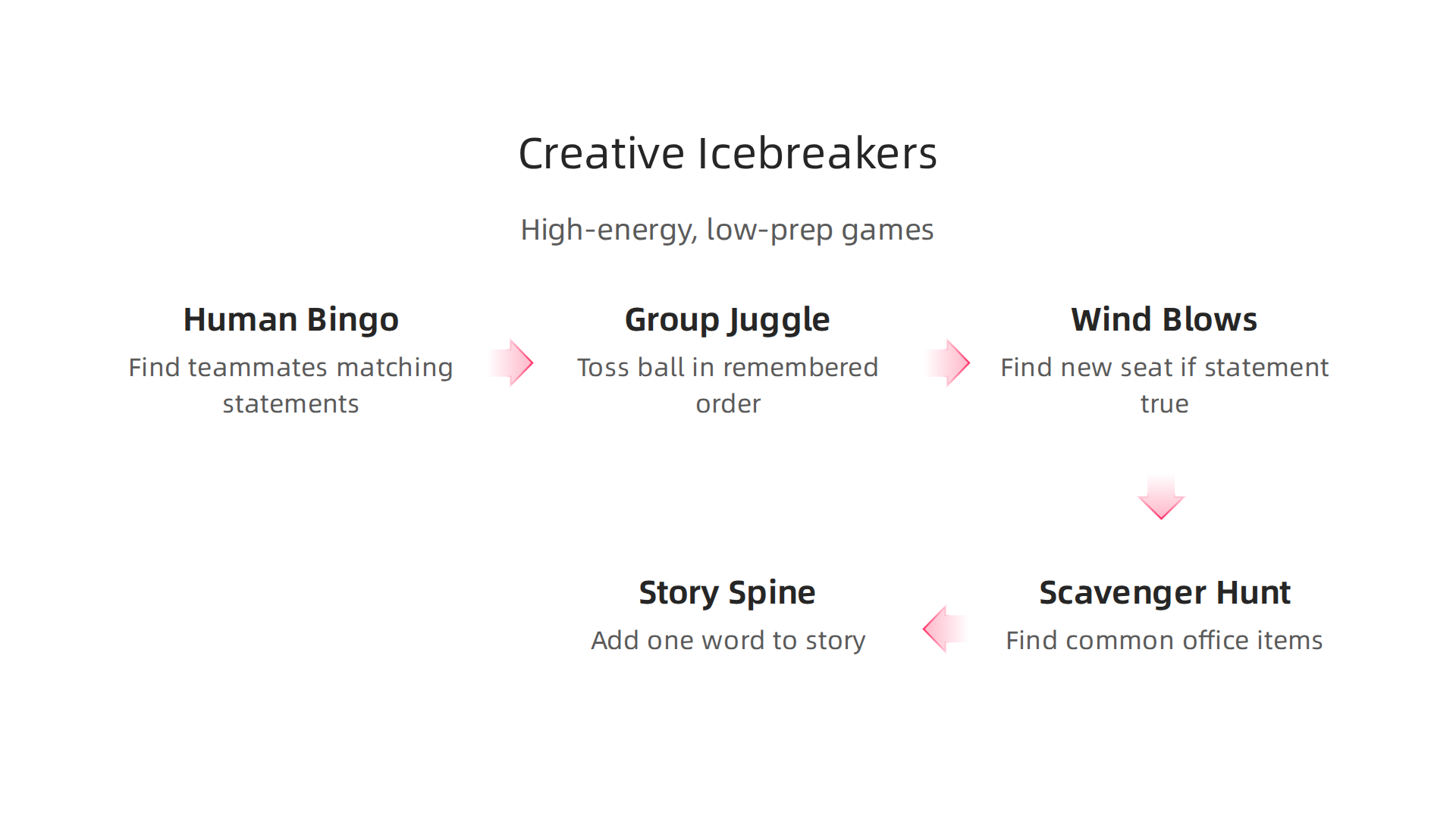
Human Bingo
This is a classic and simple way for people to learn new things about each other.
- How it works: Give everyone a bingo card. Each square has a different statement, like "Has traveled to another country," "Loves to cook," or "Has a pet." People walk around and talk to their teammates to find someone who fits each square. When they find a match, that person signs the square. The first person to get five in a row shouts "Bingo!"
- Time: 10-15 minutes
- Prep needed: Print out bingo cards for everyone.
- Great for: Small and large groups. It’s a fantastic way to meet the team members you don’t know well.
Group Juggle
This activity helps with focus and teamwork.
- How it works: Everyone stands in a circle. One person starts by tossing a soft ball or beanbag to someone else, making eye contact. That person then tosses it to a new person, and so on, until everyone has caught and thrown the ball once. Remember the order! Then, try to repeat the exact same pattern, but faster. You can even add a second or third ball to make it more challenging.
- Time: 5-10 minutes
- Prep needed: One or more soft items like small balls or beanbags.
- Great for: Small and medium-sized groups.
The Great Wind Blows
This is a super simple game that gets people moving chairs around and laughing.
- How it works: Arrange chairs in a circle, one for each person except the leader. The leader stands in the middle and says, "The great wind blows for everyone who…" and finishes the sentence with something true about them (e.g., "…has blue shoes," or "…drank coffee this morning"). Everyone for whom the statement is true must stand up and find a new seat. The person left without a chair becomes the new leader.
- Time: 5-10 minutes
- Prep needed: Just enough chairs for everyone minus one.
- Great for: Medium to large groups.
Office Scavenger Hunt (Mini Version)
This turns exploring your workspace into an exciting team challenge.
- How it works: Break into small teams. Give each team a short list of common office items to find quickly (e.g., "a paperclip," "something red," "a sticky note with a funny drawing"). The first team to collect all items or take pictures of them wins. You can also hide a few unique items around the meeting room beforehand.
- Time: 10-15 minutes
- Prep needed: A list of items. Optionally, hide a few things.
- Great for: Small to medium groups, and it’s one of those Fun Corporate Activities that Rebuild Team Energy.
Story Spine
This activity encourages creativity and quick thinking, with everyone adding to a shared story.
- How it works: Everyone stands in a circle. The first person starts a story with "Once upon a time…" The next person adds "And every day…" The third person says "But one day…" And so on, following a simple story structure like: "And because of that…" "And because of that…" "Until finally…" "And ever since then…" Each person adds one sentence to keep the story going.
- Time: 5-10 minutes
- Prep needed: None.
- Great for: Small to medium groups.
Tips for Making In-Person Ice Breakers a Hit
- Be Clear: Explain the rules simply and answer any quick questions.
- Make Space: If activities involve movement, ensure there’s enough room for everyone to participate safely and comfortably.
- Keep it Short: These are warm-ups, not the main event. Stick to the time limits.
- Encourage, Don’t Force: Not everyone loves being the center of attention. Make it easy and fun to join, but respect if someone prefers to watch for a round or two.
- Lead with Energy: Your excitement for these ice breakers for team meetings will make others excited too!
Using these creative and high-energy games can transform the start of any in-person meeting or event, helping your team connect, laugh, and get ready for great work together.
Ice breakers that prime creativity and divergent thinking
Beyond just getting people moving, some ice breakers for team meetings are designed to get minds spinning with new ideas. These activities help your team think in fresh ways and get ready for deep discussions or brainstorming. This is super helpful when you want to make sure everyone feels free to share their thoughts, no matter how wild. Many companies in 2026 are looking for ways to make their teams more creative and innovative, as research shows that the right icebreaker activities can actually help teams innovate.
Here are some fun team games that wake up your creative side:
Picture Prompt
This activity is great for seeing things differently.
- How it works: Show your team an unusual or abstract picture. It could be a strange piece of art, a funny photo, or something with lots of hidden details. Ask everyone, "What do you see?" or "What story does this picture tell?" There are no wrong answers, so everyone can share their ideas freely.
- Time: 5-10 minutes.
- Prep needed: Find one interesting, thought-provoking picture to display.
- Great for: Small and large groups, either in person or working from different places. It’s an easy team building activity to encourage new ways of looking at things.
- Hybrid Adaptation: Share the image on a screen for all to see. Team members can speak out loud or type their ideas into the chat.
One Word Story
This helps with quick thinking and building ideas together.
- How it works: One person starts a story by saying just one word. The next person adds another single word to keep the story going. Keep going around the group, with each person adding only one word. You’ll be surprised how a funny or crazy story comes to life!
- Time: 5-7 minutes.
- Prep needed: None.
- Great for: Small to medium groups. This helps everyone get their brains working fast and connects the team through shared humor.
- Hybrid Adaptation: Use a shared online document or a meeting chat where people can type their words one after another. This simple game is one of the 12 Web Games To Boost Team Focus And Connection During Breaks.
Desert Island Dilemma
This game makes problem-solving fun and helps teams think outside the box.
- How it works: Tell your team they are stranded on a desert island. They have only five random items with them. For example, give them: a rubber duck, a magnifying glass, a roll of duct tape, an old shoe, and a bag of marshmallows. Break them into small teams and give them 5 minutes to come up with a plan to survive using only these items. Then, each team shares their creative plan.
- Time: 10-15 minutes (5 minutes to brainstorm, 5-10 minutes to share).
- Prep needed: A list of 5 funny or unusual items.
- Great for: Medium to large groups. It’s perfect for encouraging teamwork and problem-solving skills in a lighthearted way.
- Hybrid Adaptation: Teams can go into separate virtual rooms to brainstorm their survival plans. They can then share their ideas back with the whole group.
Keeping the Creative Spark Going
After doing one of these ice breakers for team meetings, it’s a good idea to connect the fun back to your meeting’s main goal. Ask questions like:
- "What wild idea from our game can we use for the challenge we’re facing today?"
- "How did thinking outside the box in that activity help us warm up for our tasks?"
- "What new perspectives did you gain from seeing things differently?"
These creative warm-ups are not just fun team games. They help everyone feel more comfortable sharing their unique thoughts, which can lead to amazing ideas for your team.
To keep the laughter flowing, even outside of meetings, consider picking up a book that can give your team a shared laugh. You can Boost Morale With Humor.
Keeping everyone engaged in a hybrid meeting, with some people in the office and others working from home, can be tricky. You want to make sure everyone feels like they are truly part of the team, no matter where they are. Luckily, there are many fast and fun team games that work great for this setup. These quick ice breakers for team meetings help everyone connect, get comfortable, and warm up their brains for the work ahead. Many companies in 2026 are finding that strong employee engagement in hybrid settings is key to success, as remote work continues to be a big part of how we do things today, as noted in a study on REMOTE WORK AND ITS IMPACT ON EMPLOYEE ENGAGEMENT.
Here are some easy team building activities that are perfect for hybrid teams:
Would You Rather? (Hybrid Edition)
This is a simple way to get everyone talking and laughing.
- How it works: Ask "Would you rather…?" questions that make people think or laugh. For example, "Would you rather have unlimited bacon or unlimited tacos?" or "Would you rather fight one horse-sized duck or 100 duck-sized horses?"
- In-person: People can raise hands or shout out answers.
- Remote: Everyone can use the chat box to type their answer quickly, or unmute themselves to share. This is one of the 13 fun (not awkward) virtual icebreakers for your hybrid meetings.
- Time: 3-5 minutes.
- Prep needed: Think of 2-3 funny or interesting "Would you rather" questions.
- Great for: All group sizes, helping everyone get to know each other better and starting conversations.
Show and Tell (Quick Photo Edition)
This game helps people share a bit about themselves in a fun, visual way.
- How it works: Ask everyone to quickly grab an item near them that tells a short story, or to share a photo from their phone that fits a certain theme (like "your favorite food" or "something that makes you smile").
- In-person: People can hold up their items.
- Remote: People can hold up items to their camera or share a photo on the screen. This is a great way to meet the team and see a bit of their personality.
- Time: 5-10 minutes, depending on group size.
- Prep needed: Just pick a theme or ask for a random item.
- Great for: Small to medium groups, building personal connections and creating shared moments.
Guess Who Online (Quick Facts)
This is a fun team game that works well for getting to know colleagues.
- How it works: The leader shares one interesting, non-obvious fact about a team member without saying who it is. Everyone else has to guess who the fact belongs to. For example, "This person once volunteered at a big cat rescue."
- In-person: People can call out guesses.
- Remote: Team members can type their guesses into the chat.
- Time: 5-7 minutes.
- Prep needed: The leader needs to gather 3-5 fun facts about different team members beforehand. Keep them light and positive!
- Great for: All group sizes, especially when you want to learn more about each other in a lighthearted way. If you’re looking for more interactive options for online setups, there are many Fun Online Games to Play with Friends for Remote Team Building.
How to Make Hybrid Games Run Smoothly
For these ice breakers for team meetings to work well, especially in a hybrid setting, a little planning goes a long way.
Think of it like setting up a small show!
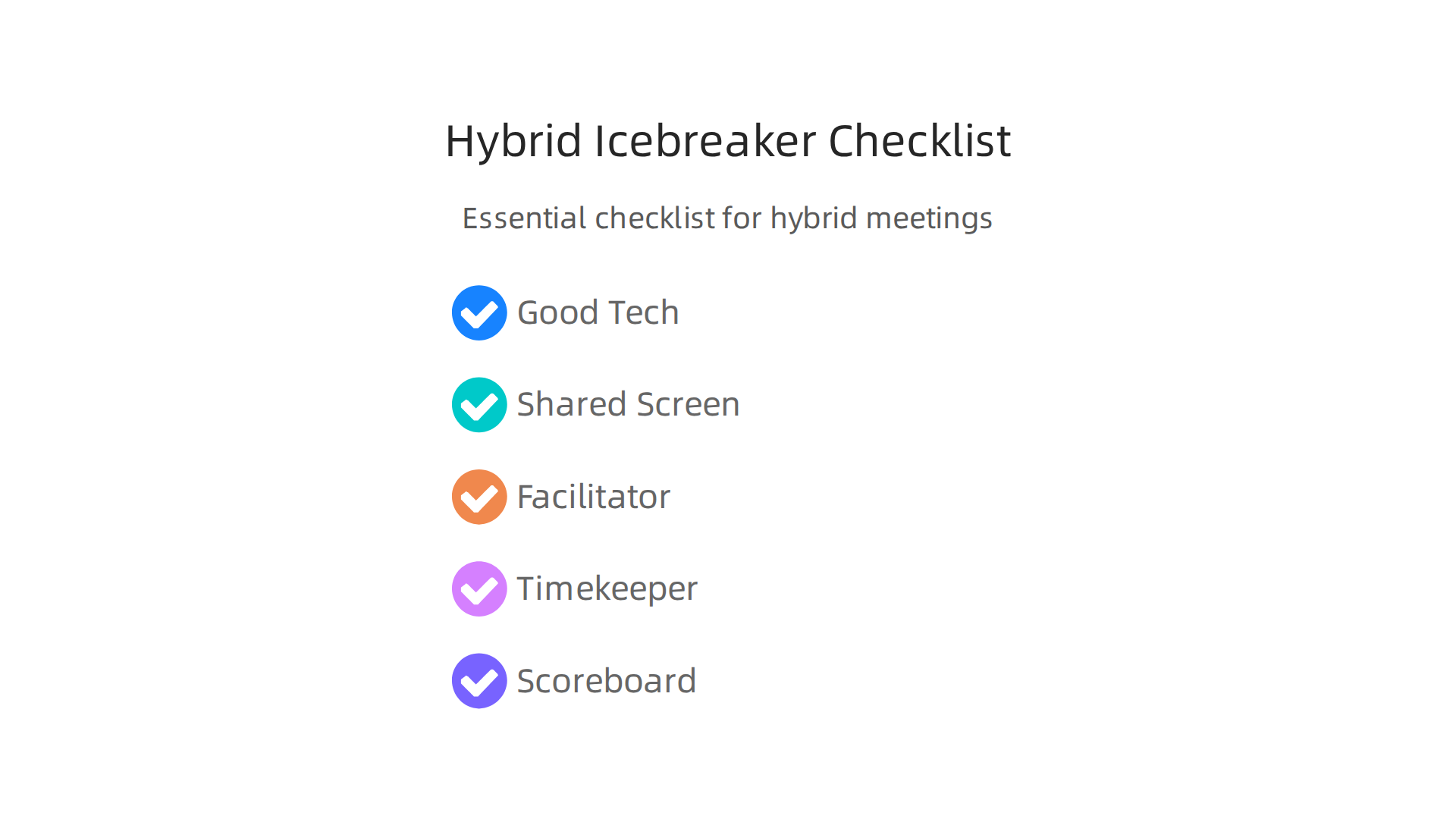
- Checklist for Success:
- Good Tech: Make sure the camera and microphone in the meeting room work well so remote folks can see and hear everyone clearly. Remote participants also need good internet and cameras on.
- Shared Screen: Use a shared screen or online whiteboard for visuals or written responses. Tools like Miro offer Free Icebreaker Templates & Games that are perfect for this.
- Facilitator: One person should lead the game, explain the rules, and make sure everyone gets a turn.
- Timekeeper: Have someone keep track of time so the game doesn’t run too long.
- Scoreboard (Optional): For competitive games, a simple online scoreboard or chat tally can add to the fun.
By having these things ready, you make sure everyone, whether they’re in the room or joining from afar, feels included and can fully enjoy these fun team games.
Need a Fun Team Spark? Meet a sci-fi comedy built for laughter and unexpected perspective. Need a Fun Team Spark?
Even with the right tech, the heart of great ice breakers for team meetings is making sure they are welcoming for everyone. When you design these fun team games, it’s important to think about all the different people on your team. This means making sure activities are inclusive and sensitive to everyone’s background and needs.
Making Games Accessible for All
Think about how different people might experience your chosen activity:
- Physical Needs: Avoid games that need standing up or moving around a lot if someone might have trouble with that. Make sure activities are easy to do from a chair.
- Sensory Needs: Be careful with very loud noises, fast-moving visuals, or flashing lights. Some people can be very sensitive to these.
- Clear Instructions: Always give simple, clear instructions, maybe even written ones. This helps everyone, especially those who might process information differently or who are not native English speakers.
Respecting Different Cultures and Backgrounds
What’s funny or normal in one culture might be confusing or even uncomfortable in another.
- Cultural Sensitivity: Avoid jokes or topics that might not translate well or could be seen as rude. For example, some "Would You Rather" questions might touch on sensitive subjects for some cultures. Keep it light and general.
- Personal Space: Be aware of personal space, especially in in-person parts of hybrid meetings.
- "Guess Who Online" Facts: If you play "Guess Who Online," make sure the facts you pick are truly universal and won’t make anyone feel singled out or misunderstood. Focus on hobbies, skills, or positive experiences.
Giving People a Choice (Opt-Outs)
Sometimes, people just don’t feel like participating, and that’s okay. Building a safe space where people feel comfortable to be themselves is key. Offering a gentle "pass" option helps create psychological safety in the team.
- No Pressure: Clearly state that participation is optional. No one should feel forced or embarrassed if they decide not to join a game.
- Easy Out: Offer a simple way for people to opt out, like a private message to the host or a general statement like "If you’d rather just observe, that’s fine too!"
- Focus on Comfort: The goal is to build connection, not create discomfort. An inclusive environment makes it easier for everyone to enjoy these easy team building activities.
Ideas for Diverse Teams
Here are some ways to modify activities for different team members:
- For Neurodiverse Teams:
- "Would You Rather": Provide options visually on a shared screen. Give everyone a moment to think before answering.
- Visual Prompts: Use more visual prompts in "Show and Tell" activities, like showing pictures of different themes they can pick from, instead of just saying them aloud.
- For Multilingual Teams:
- Chat Box Fun: Encourage everyone to use the chat box for written answers. This gives people time to think and type in their preferred language if needed, or translate.
- Simple "Show and Tell": This is great because it’s mostly visual. People can simply show an item without needing many words to describe it.
By keeping these points in mind, you can make sure your ice breakers for team meetings truly help everyone feel like they belong and can enjoy connecting with their colleagues. When everyone feels comfortable, it paves the way for stronger team bonds and better work together, and there are many games for team building activities that rebuild connection and trust.
Do you ever find your team needs a good laugh to shake things up? A bit of lighthearted fun can really improve team spirit. If you’re looking for something that encourages a shared laugh and a fresh point of view, you might want to consider adding humor. Want to explore a fun way to reset the mood and get people smiling? Try something new to Boost Morale With Humor and bring a fresh perspective to your team interactions.
After making sure your ice breakers for team meetings are welcoming for everyone, the next step is to see if they are actually working. How do you know if your team feels more connected or if the fun team games are making a real difference? It is simpler than you think to track how well these activities are doing.
Simple Ways to Check How Things Are Going
You do not need fancy tools to see the impact of your easy team building activities. Here are some quick ideas:
- Look at Who Joins: Just keep a simple count of how many people take part in the activity. If more people join each time, it is a good sign! This is called the participation rate.
- Ask Quick Questions: Right after an ice breaker, ask a very short question. You can do this with a quick poll or by asking everyone to share one word in the chat. Questions like, "Did you enjoy this activity?" or "Did you feel more connected to your team?" are perfect. These are like little check-ins called "pulse questions."
- Take Notes: As the person leading the activity, pay attention. Are people smiling and laughing? Are they talking more than usual?

Write down these observations. These qualitative notes can tell you a lot about the mood and energy of the team during your meet the team sessions. Studies show that when teams have higher engagement, they often perform better and have happier customers too Anticipating Success: Understanding and Activating Employee Engagement.
Try a Little Experiment
To find out which ice breakers for team meetings work best for your group, you can try a small experiment. Think of two different activities you want to try, like "Guess Who Online" one week and a "Two Truths and a Lie" game the next.
- Choose Two Ideas: Pick two different fun team games.
- Try Them Out: Do one activity with your team. Gather your feedback using the tips above (participation, quick questions, notes).
- Try the Other: A week or two later, do the second activity. Again, gather feedback.
- Compare: Look at your notes for both activities. Which one had more people joining? Which one got more smiles or positive comments?
This helps you see what your team likes most. It is a simple way to "A/B test" your activities.
Keep a Simple Record
Make a basic list or spreadsheet where you write down:
- The name of the ice breaker you used.
- The date you did it.
- How many people joined.
- A few notes on how it went (e.g., "Lots of laughter," "Some shy people didn’t speak up," "Everyone loved it!").
- Any ideas for how to make it better next time.
By keeping these notes, you will learn over time what really brings your team together. This way, you can keep finding fun corporate activities that rebuild team energy and boost performance. It helps you make future ice breakers even more effective and enjoyable.
Summary
This article explains how a five‑minute ritual — a short ice breaker or warm‑up — can revive energy, connection, and creative thinking in team meetings, whether remote, in‑person, or hybrid. It describes why ice breakers matter beyond small talk (building trust, resetting focus, and creating shared connection), when to use them and when to skip them, and offers a variety of practical activities for remote, in‑person, and hybrid groups. You’ll find clear instructions, timing and tech needs for each quick game, plus tips to run them well, make them inclusive, and keep them brief. The guide also shows simple ways to measure effectiveness (participation rates, pulse questions, facilitator notes) and run small experiments to learn what your team likes. After reading, you’ll be able to pick appropriate five‑minute rituals, run them confidently, and track whether they help your team engage and perform better.