
Cute Games for Team Building to Boost Morale and Engagement

Introduction: Why Fun Matters Now More Than Ever
Here is a hard truth for 2026. Only about 1 in 5 employees worldwide feels truly engaged at work. According to Gallup’s 2026 report, that lack of connection costs the global economy a staggering $10 trillion in lost productivity every year.
You might feel that pinch yourself. Maybe your team seems quiet. Maybe people just do their tasks and log off. Low morale, high turnover, and burnout are not just HR problems. They are culture problems.
But here is the good news. The fix does not have to be expensive or complicated. In fact, some of the most powerful tools are also the most playful.
Think about cute games. Simple, lighthearted activities like coloring games online, a quick round of Google doodles games pacman, or even a shared laugh over a funny story. These moments do more than entertain. They reduce stress, spark creativity, and help people feel connected.

They are a low-cost, high-impact way to rebuild energy across your team.
And the research backs this up. According to the People Element 2026 Employee Engagement Report, engagement has seen only a modest recovery. Companies that invest in meaningful, human-centered experiences see better results. That is where games for team building shine. They are not a distraction. They are a strategic move.
This article walks you through a simple, research-backed plan to use free coloring games and other cute activities to boost morale and collaboration. You will learn exactly what works, why it works, and how to get started without a big budget.
Ready to build a happier, more connected team? Start with a step that feels good. Browse Activities and find simple ideas that fit your team right now.
Let us dive in.
Why Cute Games Boost Team Dynamics: The Science Behind the Smile
So we know that low engagement is a real problem. But why do cute games like coloring games online or a quick round of google doodles games pacman actually move the needle? It is not just about having fun. There is real science behind why play works in a professional setting.
Let us break it down into three simple pieces.
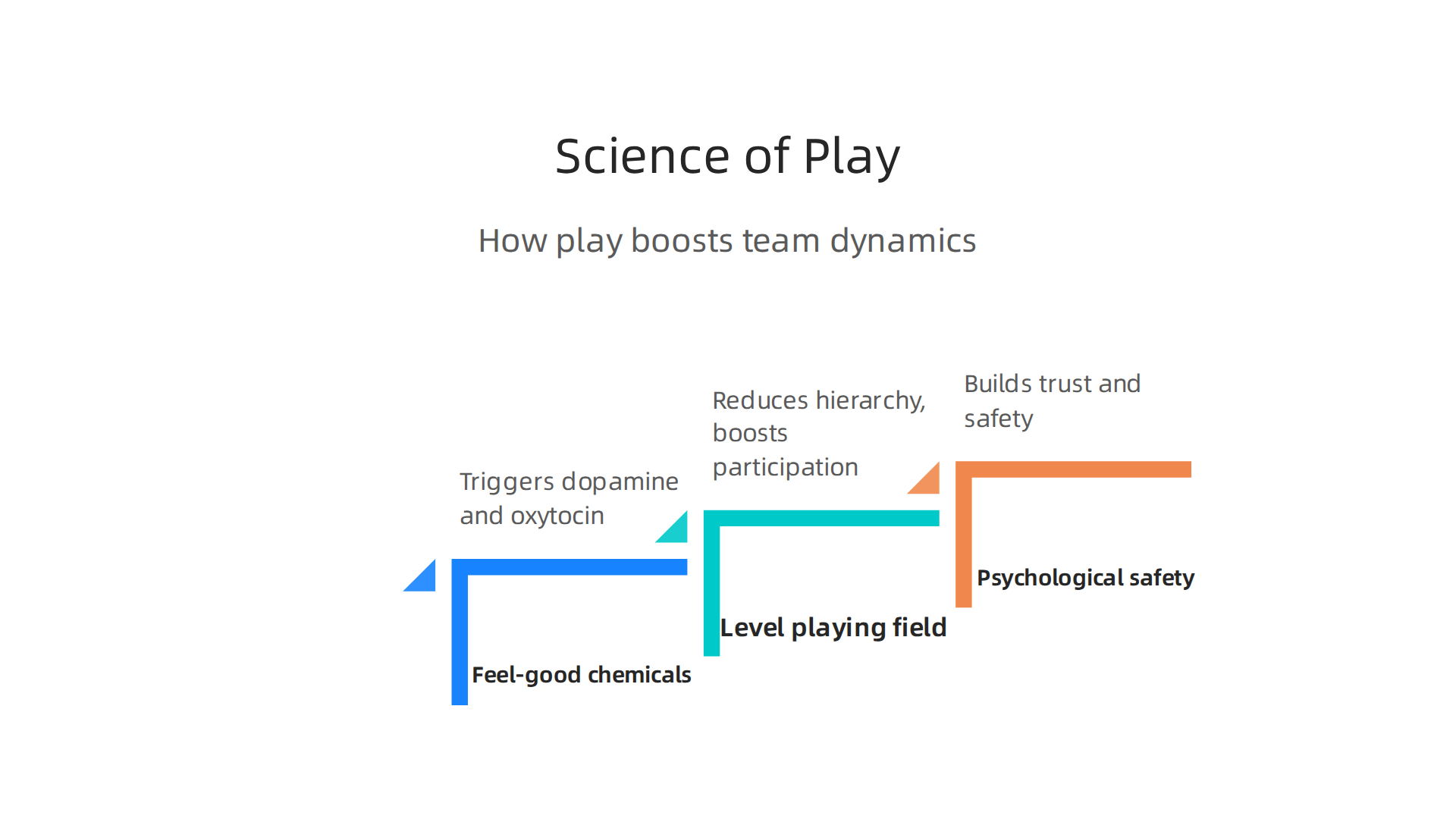
Play triggers feel-good chemicals in the brain
When you play, your brain releases dopamine. That is the chemical that makes you feel rewarded and motivated. It is the same one you get from finishing a task or earning a compliment. According to research from Harvard Business Review, integrating play into your culture is crucial for fostering creativity and innovation. When your team plays together, they get a small hit of dopamine. That good feeling sticks around and makes them more open to collaborating afterward.
Play also releases oxytocin, sometimes called the "bonding chemical." This helps people trust each other more. A 2026 review in Annual Reviews confirms that playfulness helps people reframe situations in more engaging ways. That shared laugh over a silly coloring page is actually wiring your team to trust each other.
Cute games level the playing field
Here is the thing about traditional team building. It often favors the loudest people in the room. But cute games are different. They are low stakes and simple. Anyone can join. No expert status is required.
Research published in Taylor & Francis shows that play at work works because it temporarily suspends workplace conventions and organizational pressures. That means the junior designer and the CEO can both enjoy a free coloring game without worrying about hierarchy. When everyone plays on equal footing, you reduce status barriers. People feel safer speaking up and sharing ideas.
This is especially powerful in remote or hybrid teams where people can feel left out. A shared activity like a quick online doodle session makes everyone feel like they belong.
Regular play builds psychological safety
Psychological safety is the belief that you will not be punished for making a mistake or speaking up. Google’s famous Project Aristotle found it was the number one factor in high-performing teams.
So how do you build it? Not through big speeches. Through small, repeated, low-risk interactions. A study from the Cambridge Handbook of Creativity and Emotions found that psychological safety has significant effects on both individual and team creativity. And a separate study in The Open Psychology Journal confirms that team dynamics are significantly impacted by psychological safety.
Cute games create exactly those low-risk moments. When you color a goofy picture together and share it, you are practicing vulnerability in a safe space. Over time, that practice builds a culture where people feel comfortable taking risks. That is where real innovation happens.
The takeaway
Cute games are not just fun. They are a strategic tool for rewiring how your team connects. The science is clear: play boosts bonding, flattens hierarchy, and builds the trust your team needs to do great work.
Ready to put this science into action? Browse Activities and find simple, research-backed ideas that fit your team right now.
Selecting the Best Cute Games for Your Team Size and Culture
You now know the science. Play boosts bonding. It builds safety. But how do you pick the right cute game for your specific team? Not all games work for every group. The wrong choice can feel awkward or forced. And research from Sage Journals confirms that when play is imposed inauthentically, it backfires. So let us get practical.
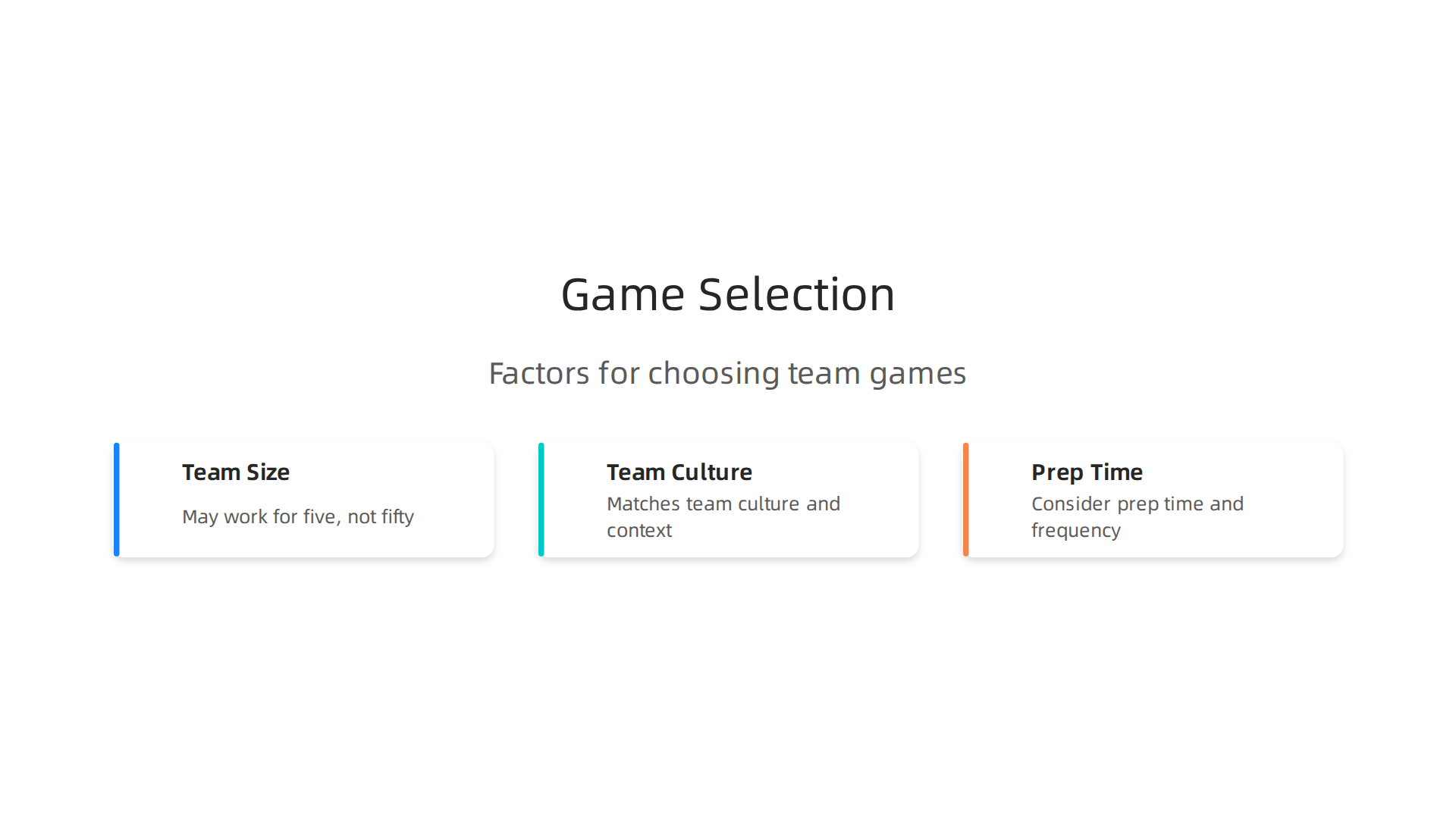
The first thing to think about is your team size. A game that works for five people might fall flat with fifty.
For small teams (under 10), intimate activities work best. Think of a quick round of google doodles games pacman shared on a video call. Everyone gets a turn. It is personal. For larger teams, you need scalable options. Try a shared free coloring game where everyone adds to the same digital canvas. Or run a themed coloring contest in breakout rooms. The key is that no one gets left out. Research from the Cambridge Handbook of Creativity and Emotions shows that psychological safety is critical for team creativity. When everyone can participate, safety grows.
Next, consider your team culture and work context. Are you remote, hybrid, or in-person? Remote teams need games that work through a screen. Virtual team building activities like an emoji check-in or a quick doodle share are zero prep and highly inclusive. For in-person teams, you can go bigger. Try a collaborative mural with coloring games online projected on a screen. The important thing is to match the energy of your group. Some teams love loud competition. Others prefer quiet, creative flow. Cute games are perfect because they sit in a gentle middle space. They invite introverts and extroverts alike.
Finally, think about prep time and frequency. You do not need a full event. The best impact comes from short, regular moments. Use a quick icebreaker like an Emoji Check-In (ask everyone to share an emoji for their mood). It takes 30 seconds. For a longer session, try a collaborative challenge like a virtual scavenger hunt. Resources like cityHUNT offer easy templates. The goal is consistency, not scale.
So which game do you start with? Pick one that matches your team size, fits your culture, and takes less than five minutes to set up. That is the sweet spot for building real connection.
Ready to stop guessing? Browse Activities and find simple, research-backed ideas that fit your team right now.
How to Facilitate Cute Games Remotely and In-Person: A Step-by-Step Guide
You picked the right game. Now comes the part that makes or breaks the experience. Facilitation. A good game can feel flat if you run it poorly. But with a simple framework, you can lead any activity with confidence. Here is your step-by-step guide.
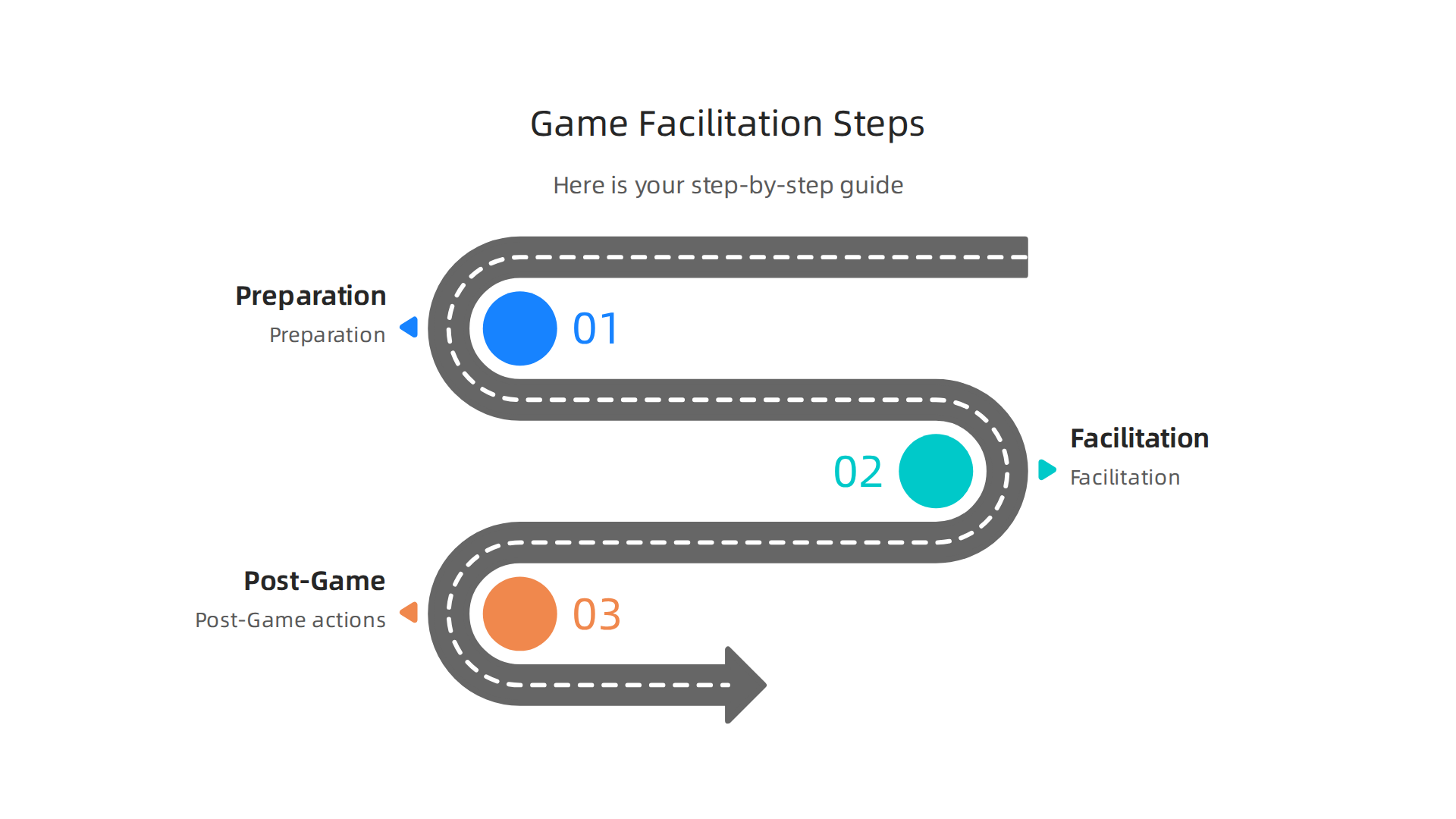
Step 1: Preparation (Get Ready Before the Fun Starts)
Do not skip this. A little prep saves a lot of awkward silence.
First, choose the right platform. For remote teams, you need a tool that supports screen sharing and easy participation. Zoom, Google Meet, or Microsoft Teams all work. Just make sure everyone knows how to use the basic features. For in-person sessions, you just need a space where people can see each other and move around.
Next, set clear rules. Explain the game in one minute or less. Tell people how long it will last and what they need to do. Keep it simple. If the rules take longer to explain than to play, simplify the game.
Finally, test your tech. Nothing kills energy faster than a frozen screen or broken audio. Run a quick test before your team joins. Resources like the Outback Team Building guide recommend a five-minute tech check to avoid common glitches.

This is especially important for games like a shared free coloring game where everyone needs to see the same canvas.
Step 2: Facilitation (Keep the Energy High)
You are the host. Your energy sets the tone.
Start with a warm welcome. A quick check-in like "share one emoji for your mood" gets everyone talking instantly. Then introduce the game with genuine excitement. People mirror your vibe.
During the game, manage time openly. Use a visible timer on screen or on your phone. Announce how much time is left at the halfway point. For a round of google doodles games pacman, give each person two minutes. Stick to the limit. This keeps the pace snappy.
Make sure everyone participates. If you notice someone is quiet, gently invite them in. Ask a direct but low-pressure question like "Sarah, what color are you choosing?" Avoid putting people on the spot in a way that feels stressful. The goal is inclusion, not performance.
If you are running a longer activity like a virtual scavenger hunt, use cityHUNT templates for easy structure.

These take the thinking out of facilitation.
Step 3: Post-Game (Make It Stick)
The game ends. Connection should not.
Take two minutes to debrief. Ask a simple question like "What did you enjoy most?" or "What surprised you?" This turns a fun moment into a shared memory.
Then integrate the insights into daily work. Did someone show great creativity during a coloring games online session? Mention it in your next meeting. Did the team laugh a lot during a collaborative challenge? Reference that inside joke later. Small callbacks build long-term bonds.
The real magic happens when a quick game turns into a lasting cultural touchpoint. For distributed teams, Zendesk highlights that regular, intentional social interaction reinforces culture beyond work tasks.

So do not let the fun end when the game ends.
Ready to put this guide into action? Browse Activities and find simple, research-backed ideas that fit your team right now.
Overcoming Resistance and Maintaining Momentum for Fun Initiatives
You have a great plan. You picked the perfect game. But when you mention it in the team chat, two people go silent. One person types "Another game?" And someone else leaves the meeting early.
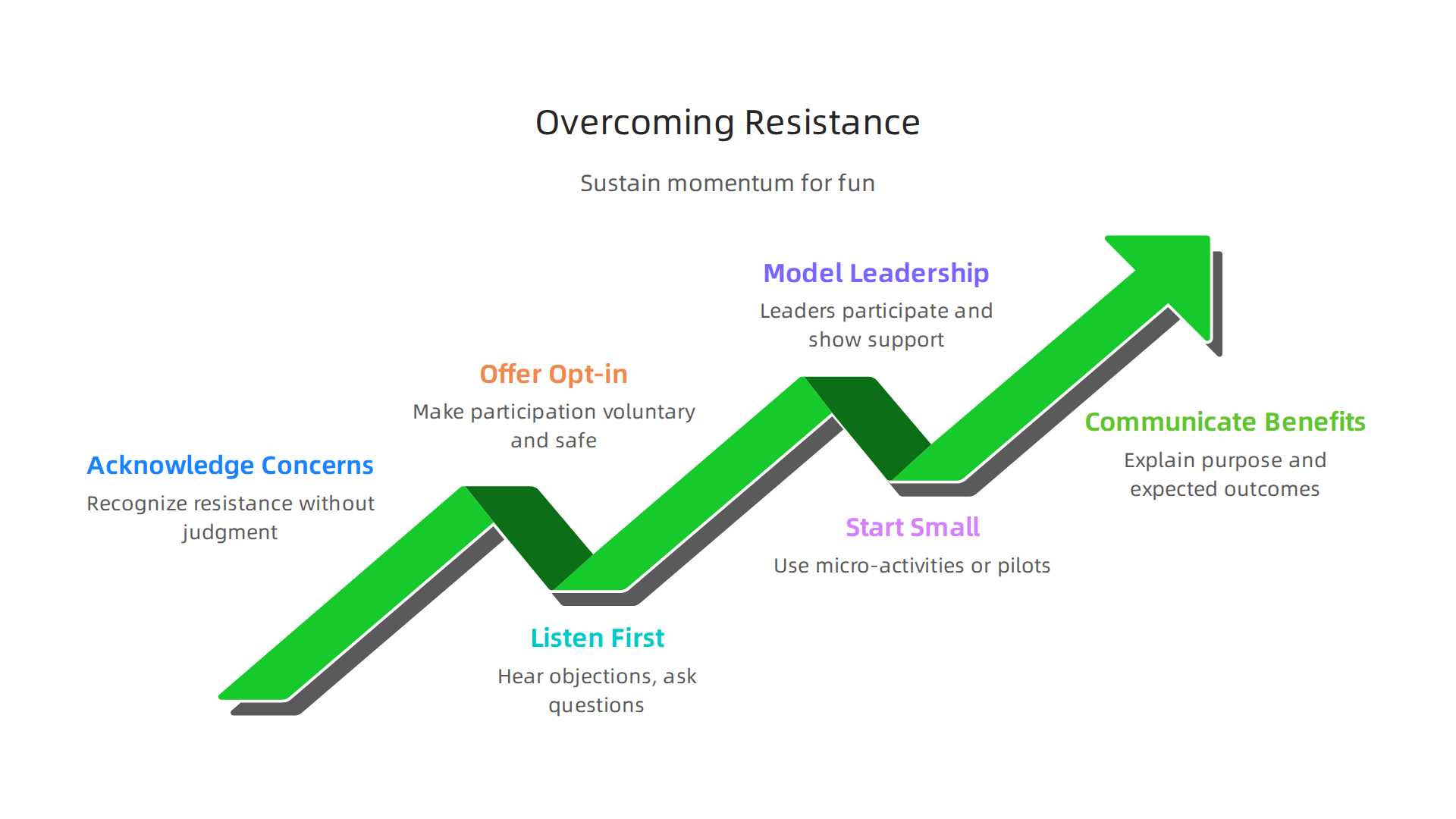
This happens. Resistance is normal. The key is to handle it without forcing fun on anyone.
Address the "Waste of Time" Objection
The most common pushback is that games feel unproductive. But the data tells a different story. Teams that engage in intentional social activities report higher morale and better collaboration. According to research from WorkTango, regular engagement activities directly improve retention and productivity.
So how do you win skeptics over? Make participation optional. Never force anyone to join. When people have a choice, they are more likely to actually enjoy it.

Also keep it short. A five minute game does not need a big justification. It is just a small break that builds connection.
Another trick is to start with low pressure activities. Simple cute games like quick icebreakers or a round of google doodles games pacman feel less intimidating than a full hour workshop. QuestWorks recommends activities ranked on introvert friendliness. Avoid anything that feels like performance.
Sustain Momentum Without Burning Out
Even the best games get stale if you repeat them too much. The secret is variety. Rotate between different types of activities. One week try coloring games online. The next week do a quick problem solving challenge. The week after that use a free coloring game as a wind down activity.
Involving a team champion helps too. Ask one enthusiastic person to help pick and lead each session. This spreads the work and gives others ownership. According to Asana, teams that rotate facilitators see higher long term engagement.
Also tie games to actual goals. If the team is working on creativity, use an idea generating game. If communication is the focus, try a collaborative puzzle. This makes the activity feel purposeful, not random.
Use Micro Activities to Build a Habit
The easiest way to overcome resistance is to make games so short that no one can argue they are a disruption. Five to ten minutes is all you need. That is shorter than most coffee breaks.
HRServices Inc points out that intentional social interaction in small doses reinforces culture better than occasional big events. A quick games for team building moment at the start of a meeting sets a positive tone for the whole session.
Start with one short activity per week. After a month it becomes a normal part of your team rhythm. People stop resisting because it is just part of how you work together.
Ready to make this easy? Browse Activities and find simple, low prep games your team will actually look forward to.
Tracking Success: Metrics and Feedback for Cute Games
So you started running cute games with your team. A few people are smiling more. Meetings feel lighter. But is it actually working?

And how do you prove it to the person who signs the budget?
The answer is simple. You track two things: numbers and feelings. Both matter.
Quantitative Metrics: What the Data Says
Start with the hard numbers. Look at engagement scores from your team platform. Are more people joining meetings on time? Are they staying longer? According to CultureMonkey, measuring metrics like participation rates helps you spot problems early and strengthen performance.
Retention is another big one. Teams that play together tend to stay together. Check your turnover rates before and after you introduced games for team building. A small drop in turnover can save thousands in hiring costs.
Productivity indicators matter too. Workday points out that modern performance metrics help teams grow and thrive. Look at project completion rates, response times, or even the number of ideas shared in brainstorming sessions. If those numbers go up after a quick round of coloring games online, you have proof the activities help.
Qualitative Feedback: The Human Side
Numbers only tell half the story. You also need to know how people feel. Pulse surveys are the easiest way. Send out a two question survey after each activity: "Did you enjoy this?" and "Would you do it again?".
Sparkbay recommends regular pulse surveys to identify problems before people start leaving. Keep it anonymous so people are honest.
A fun trick is to use smile ratings. After a free coloring game session, ask everyone to rate their mood from one to five smiley faces. Over time you will see patterns. If smile ratings are higher on game days, you have your proof.
Team reflection sessions work well too. Once a month, spend five minutes asking: "How are we connecting as a team?" The answers will tell you more than any spreadsheet.
ROI Analysis: Does It Pay Off?
Here is where you win over the skeptics. Compare the cost of low engagement against your investment in activities. Disengaged teams cost companies money through lost productivity and higher turnover. According to WorkTango, measuring ROI requires looking at metrics aligned with three key types of employee experience return.
Your investment in cute games is probably small. Maybe a free online game or a few minutes of meeting time. The return can be huge. TeamBuilding Asia notes that effective ROI measurement focuses on behavioral change and business outcomes, not just activity counts. If one person stays with your company because they feel more connected, that alone covers the cost of a hundred game sessions.
Track your metrics for three months. Then show the numbers to your manager. You will have a strong case for making cute games a permanent part of your team rhythm.
Ready to try activities you can actually measure? Browse Activities and find games designed to boost connection and performance.
Expert Insights and Proven Tips from the Front Lines
The numbers from the last section show that cute games can really work. But what do the people running them every day say? I talked to HR leaders, team leads, and workplace culture experts who have made cute games a regular part of their routine. Their stories are full of useful lessons.
One HR director at a tech startup told me she started with a simple "game of the week." Every Monday, she shared a link to a quick coloring games online activity in the team chat. Within a month, participation hit 80 percent. People started messaging her asking for more. The key? She kept it optional and never forced anyone to join. According to CustomInk, the best team building activities are the ones where people actually want to take part.
Common Pitfalls to Avoid
Not every attempt goes smoothly. Here are the biggest mistakes leaders shared with me.
Overcomplicating the activity. You do not need a full production. A round of google doodles games pacman or a shared coloring page is enough. One manager spent hours creating a custom trivia game. Nobody played it because the rules were confusing. Keep it simple.
Ignoring remote voices. If you have hybrid or fully remote team members, make sure they feel included. A leader at a distributed company told me her in-office team once played a fast game together while remote people watched silently on a screen. That is a fast way to make people feel left out. The QuestWorks team ranks activities based on how well they work for remote setups, and they warn against anything that creates an in-room bias.
Forcing participation. Nothing kills the mood faster than mandatory fun. Let people opt in. One HR leader said she lost trust with her team by requiring attendance at a virtual game session. Give people the choice to join or sit out.
Actionable Tips That Work
The pros shared two simple strategies that consistently deliver results.
Start with a "game of the week." Pick one activity and run it on the same day every week. Tuesday at 10 AM. Or Friday at 3 PM. Consistency builds habit. Over time, people look forward to it. According to Infinity Park Event Center, regular engagement activities create stronger bonds than one-off events.
Let employees co-create. Give your team a say in what they play. Put a simple poll in your chat. "Which cute game should we try next week?" When people have ownership, they show up with more energy. One team asked members to submit their own ideas for games for team building. The result was a rotating schedule that nobody wanted to miss.
The bottom line from every expert I spoke with: keep it light, keep it voluntary, and keep it consistent. That is the formula that turns cute games from a fun experiment into a lasting team tradition.
If you are ready to pick your first activity, Browse Activities and find something your team will actually enjoy playing.
Summary
This article explains how simple, low‑cost "cute" games—like online coloring pages or quick Google Doodle rounds—can meaningfully improve team engagement, creativity, and psychological safety. It reviews the science behind play (dopamine and oxytocin), shows why playful activities level status differences and build trust, and gives practical guidance for choosing games that fit team size and culture. You get a step‑by‑step facilitation guide for both remote and in‑person settings, strategies to handle skeptics without forcing participation, and ways to keep activities fresh. The piece also covers how to track success with quantitative and qualitative metrics and offers expert tips and common pitfalls from leaders who run these programs. After reading, you’ll know which quick activities to try, how to run them smoothly, and how to measure their impact so you can make play a sustainable part of your team rhythm.